Science High School Reviewer Physical Science: Simple Machines
Disclosure: This post may contain affiliate links. When you buy through links on my site, I may earn a small commission. Thank you for your support.
Simple Machines
A simple
machine is a device with few, if any, moving parts
that makes it easier to do work. For example, a
hammer, which has no moving parts, is a simple
machine.
Simple machines can change either the force that
is needed or the direction or distance through which
a force is applied.
Mechanical Advantage
The force that you apply to a simple
machine is called the effort force. The
force against which the machine acts
is called the resistance force. The force
that the machine applies to an object in
response to the effort force is called the
output force.
In the example of a hammer pulling
a nail out of a board, the effort force
is the force that a person applies to the
handle of the hammer. The resistance
force is the force that the nail being
pulled out exerts on the hammer.
The output force is the force that the
hammer applies to the nail.
The number of times a simple
machine multiplies an effort force is
called its mechanical advantage (MA).
You can find the mechanical advantage
of a simple machine by dividing the
output force by the effort force.
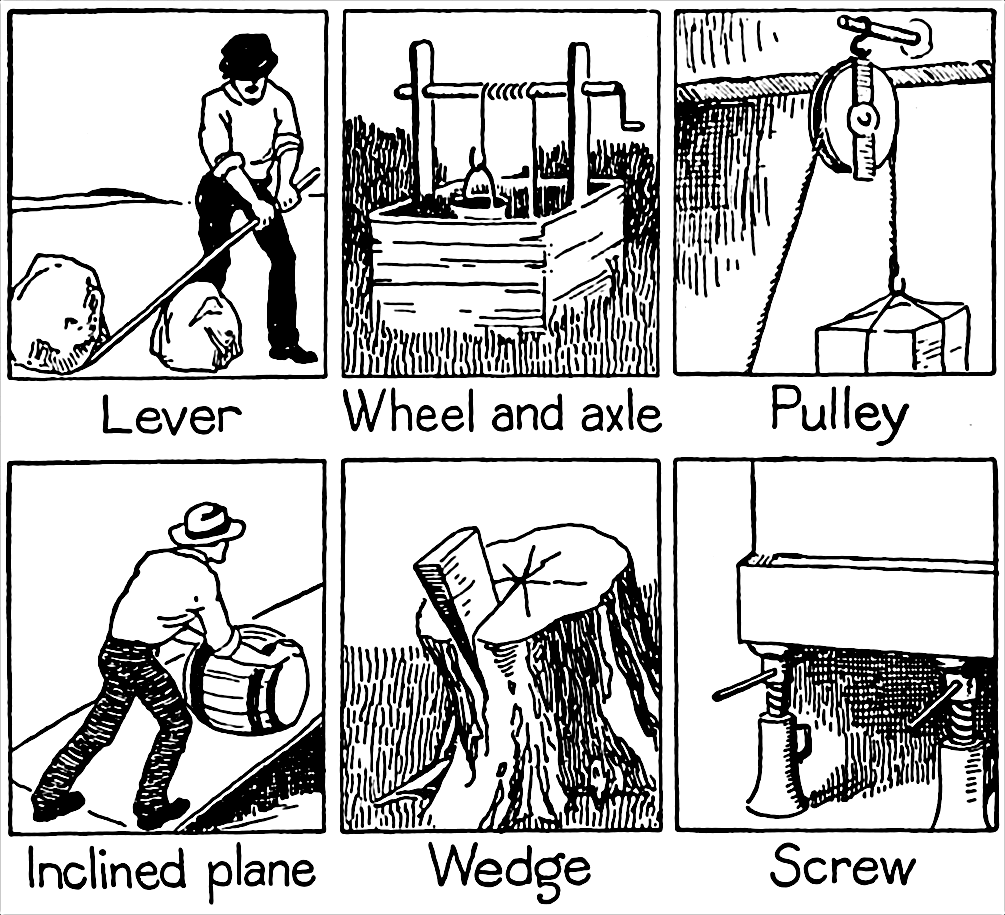
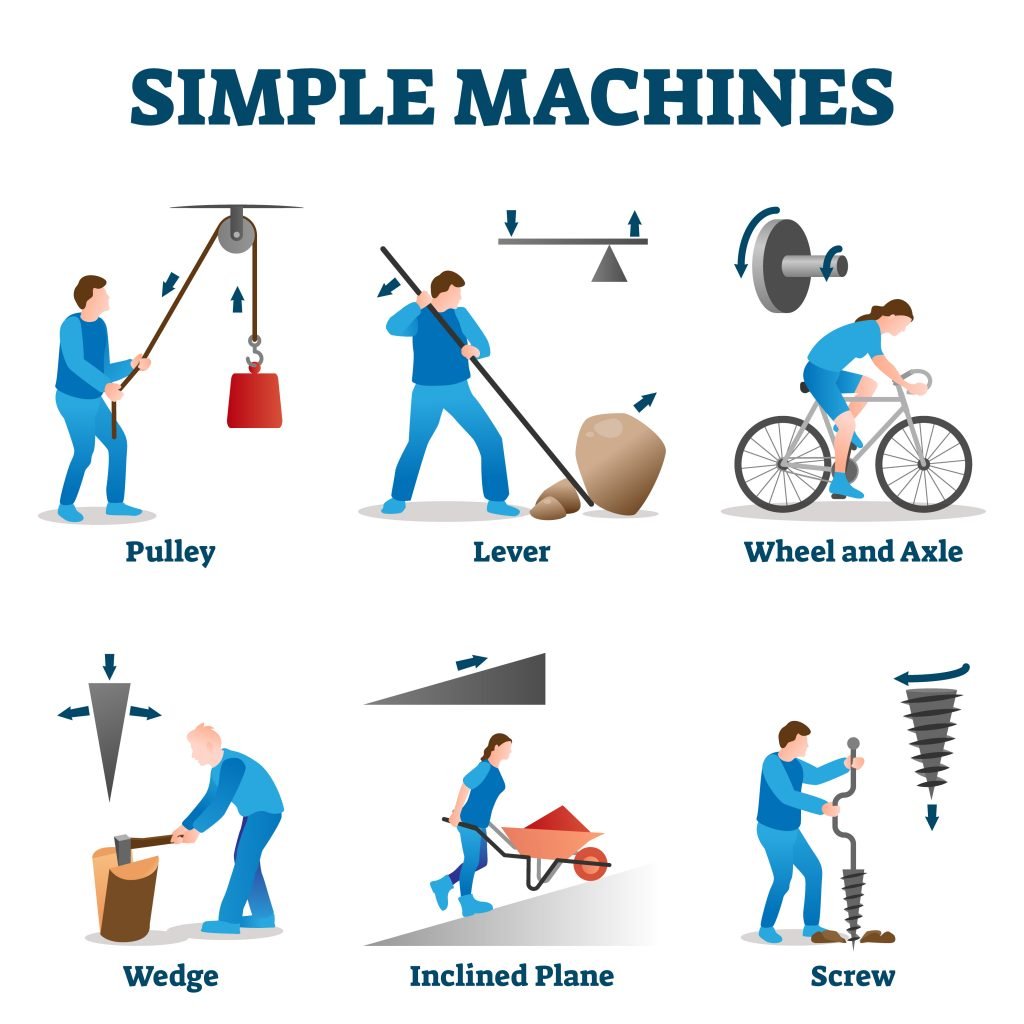
Types of Simple Machines
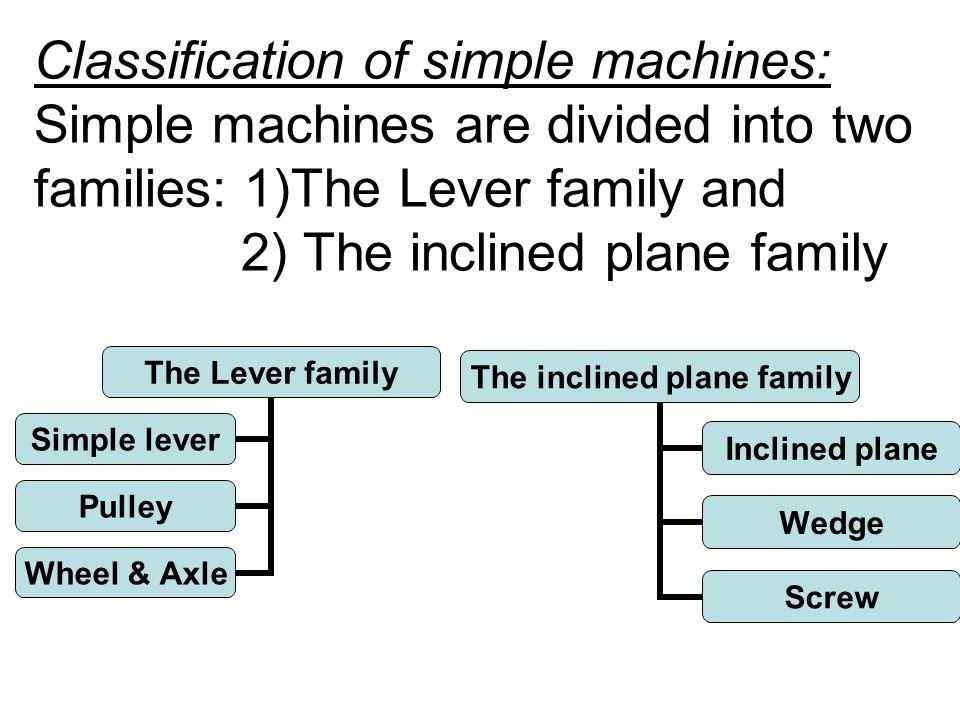
There are two main classes of
simple machines: the lever and the
inclined plane. The lever class also
includes the wheel and axle and the
pulley. The inclined-plane class also
includes the wedge and the screw.
Levers
A lever is a simple machine
consisting of a rigid bar and a pivot
point. The pivot point is called the
fulcrum. The part of the bar on which
a person applies an effort force is called
the effort arm. The portion of the bar
on which the lever produces an output
force is called the resistance arm. The
positions of the fulcrum, effort force,
and output force vary among levers.
Based on these differences, there are
three classes of levers.
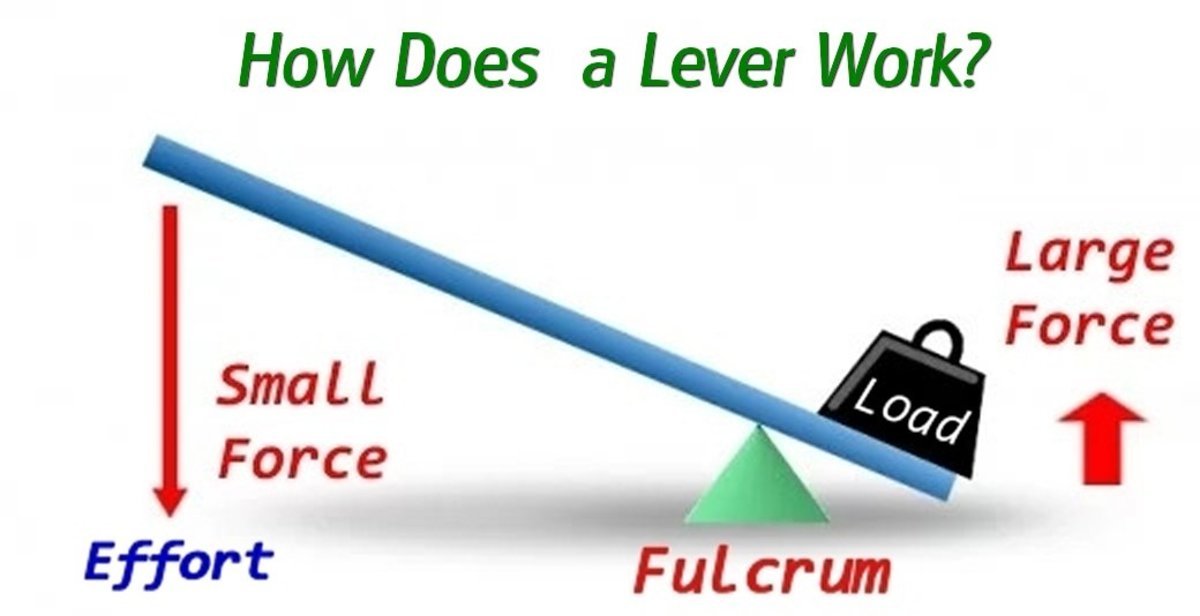
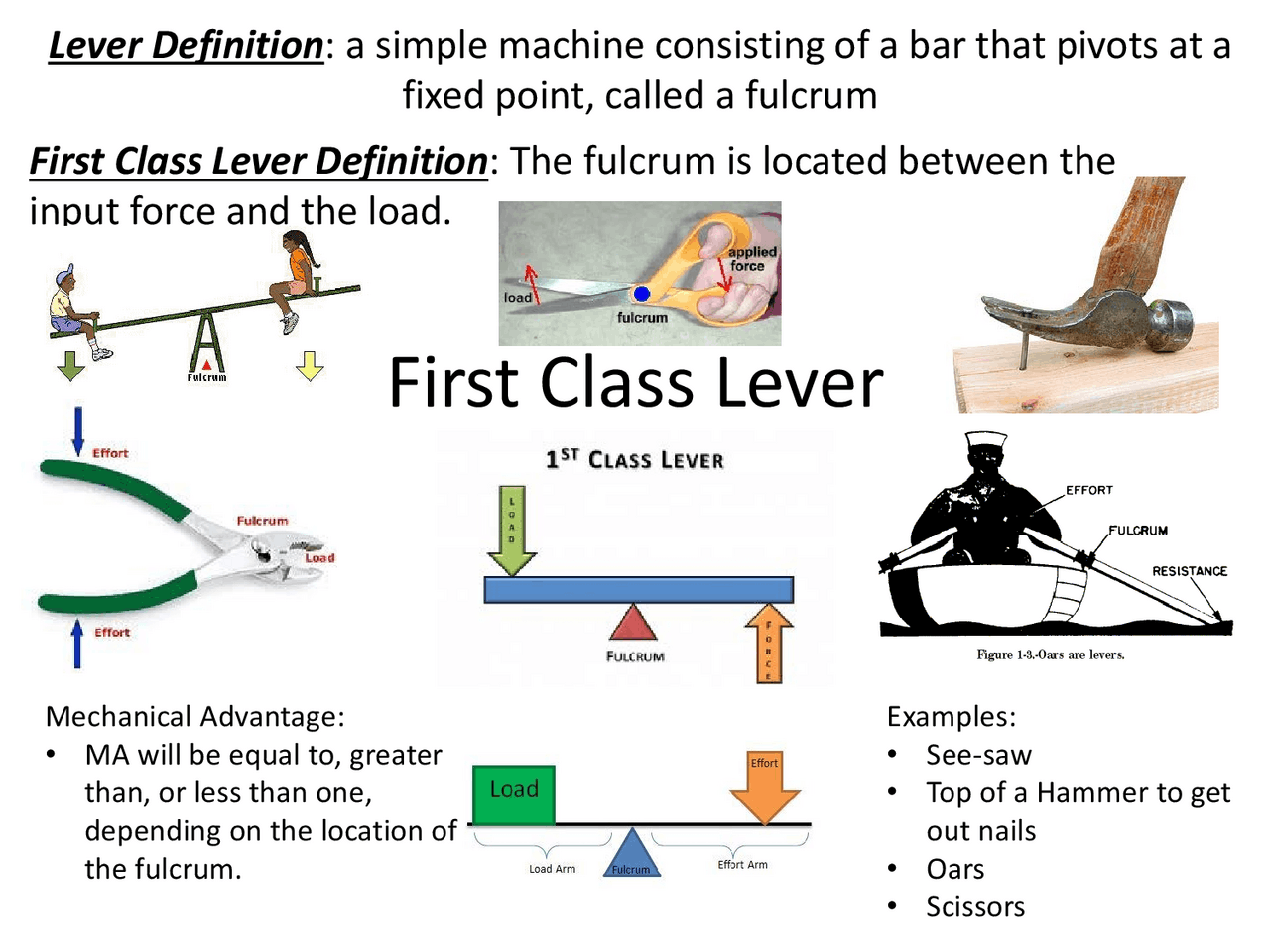
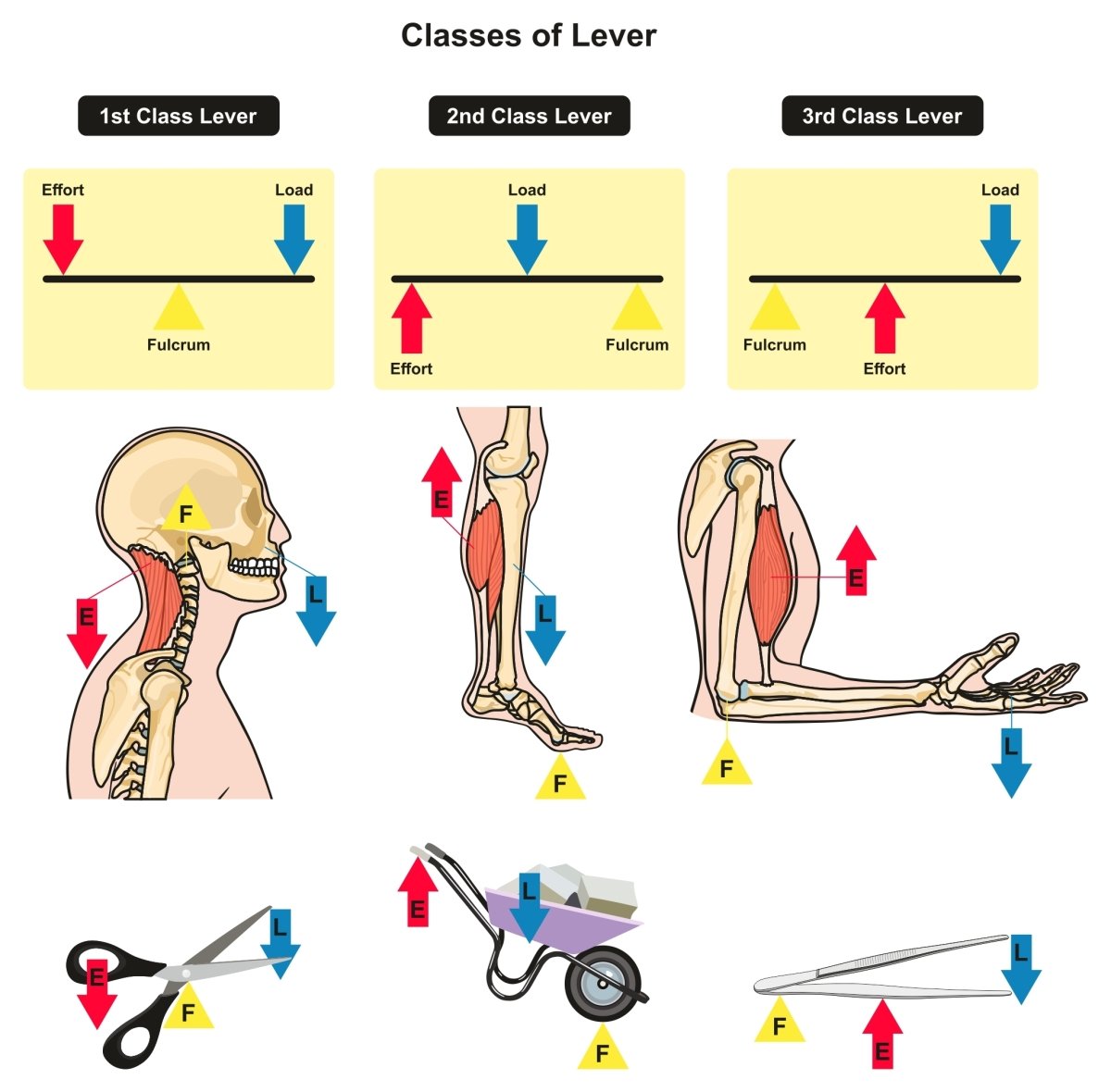
First-Class Levers
In a first-class lever, the fulcrum is
between the effort force and the output
force. For this reason, a first class lever
changes the direction of the effort
force.
As the diagram on this page shows, a
first-class lever sometimes produces an
output force greater than the effort force.
The output force is greater than the
effort force when the fulcrum is closer
to the output force than to the effort
force—that is, when the effort arm is
longer than the resistance arm.
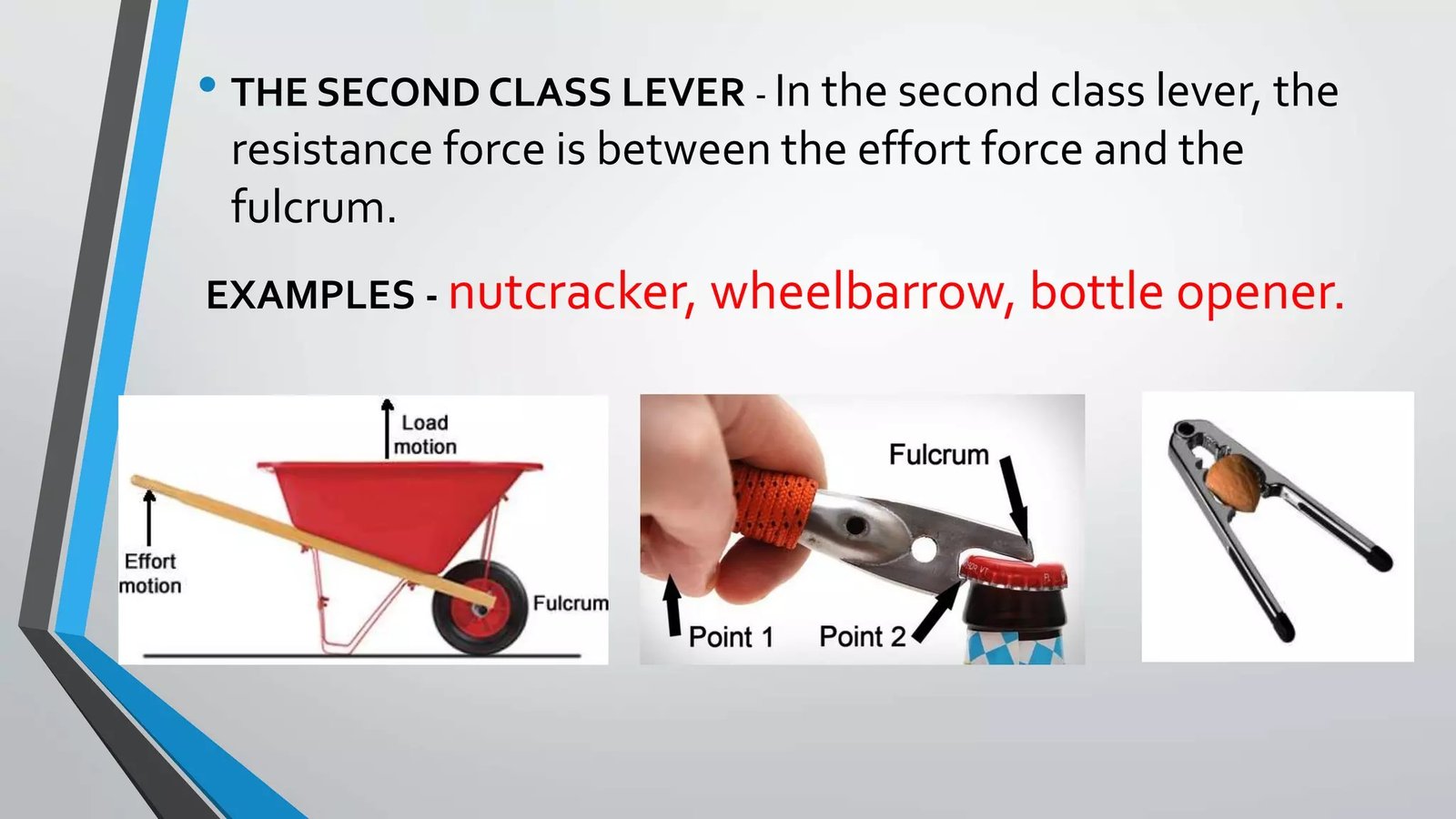
Second-Class Levers
In a second-class lever, the output
force is between the effort force and
the fulcrum. Second-class levers do not
change the direction of the effort force.
However, they produce a mechanical
advantage because the effort arm is
longer than the resistance arm. In the
wheelbarrow example on this page, the
person moves his hands farther but is
able to lift a larger load because of the
machine’s construction.
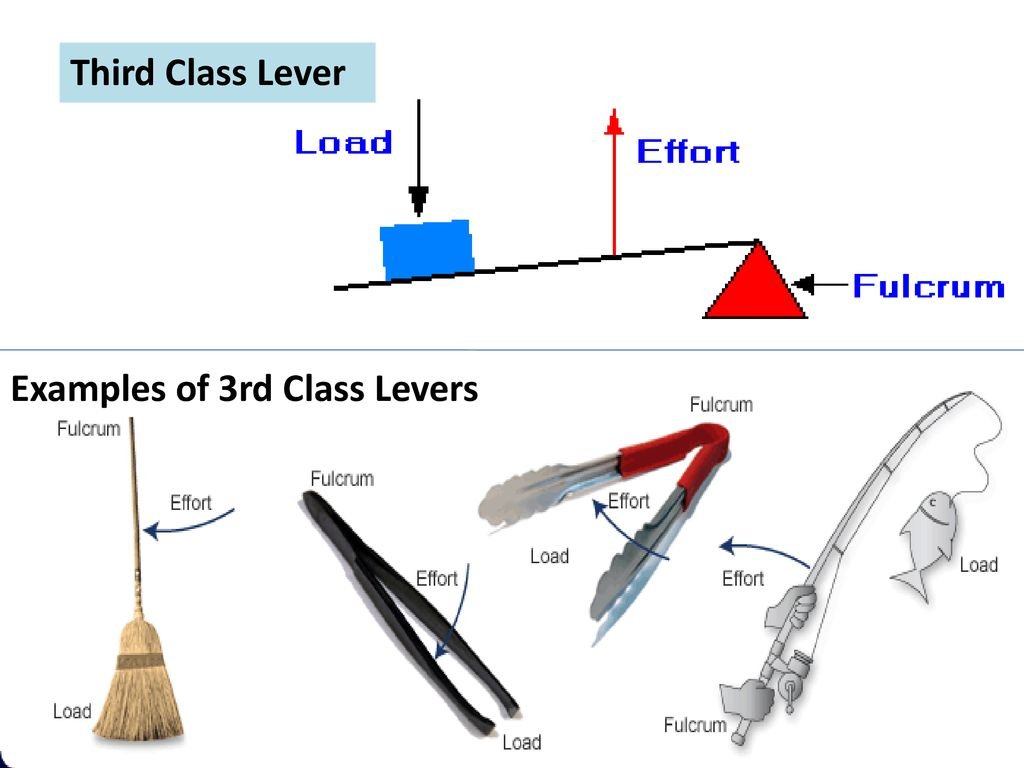
Third-Class Levers
In a third-class lever, the effort force
is between the output force and the
fulcrum. Like second-class levers, thirdclass
levers do not change the direction
of the effort force. Unlike secondclass
levers, however, third-class levers
always produce an output force that is
less than the effort force.
Levers in the human body
The wheel and axle is a simple machine that
is actually a type of first-class lever. This machine
usually consists of a wheel that applies an effort
force and a smaller axle that produces the output
force.
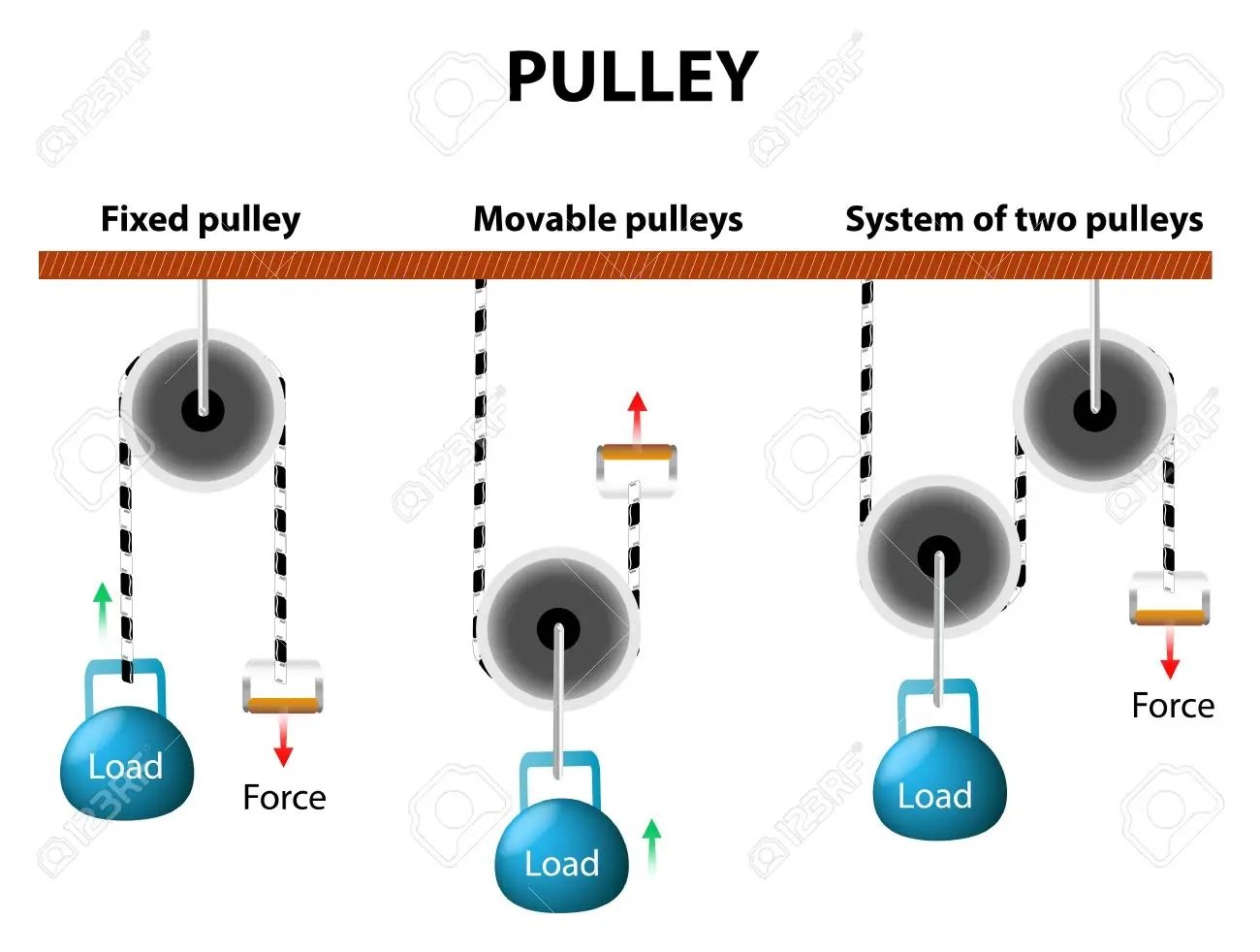
Pulleys
A pulley is a grooved wheel that turns by the
action of a rope in the groove. When the rope
moves, the wheel turns. A pulley is also a type
of lever, one in which the rope forms the arms
and the wheel serves as the fulcrum.
A pulley may be either fixed or movable.
Inclined planes
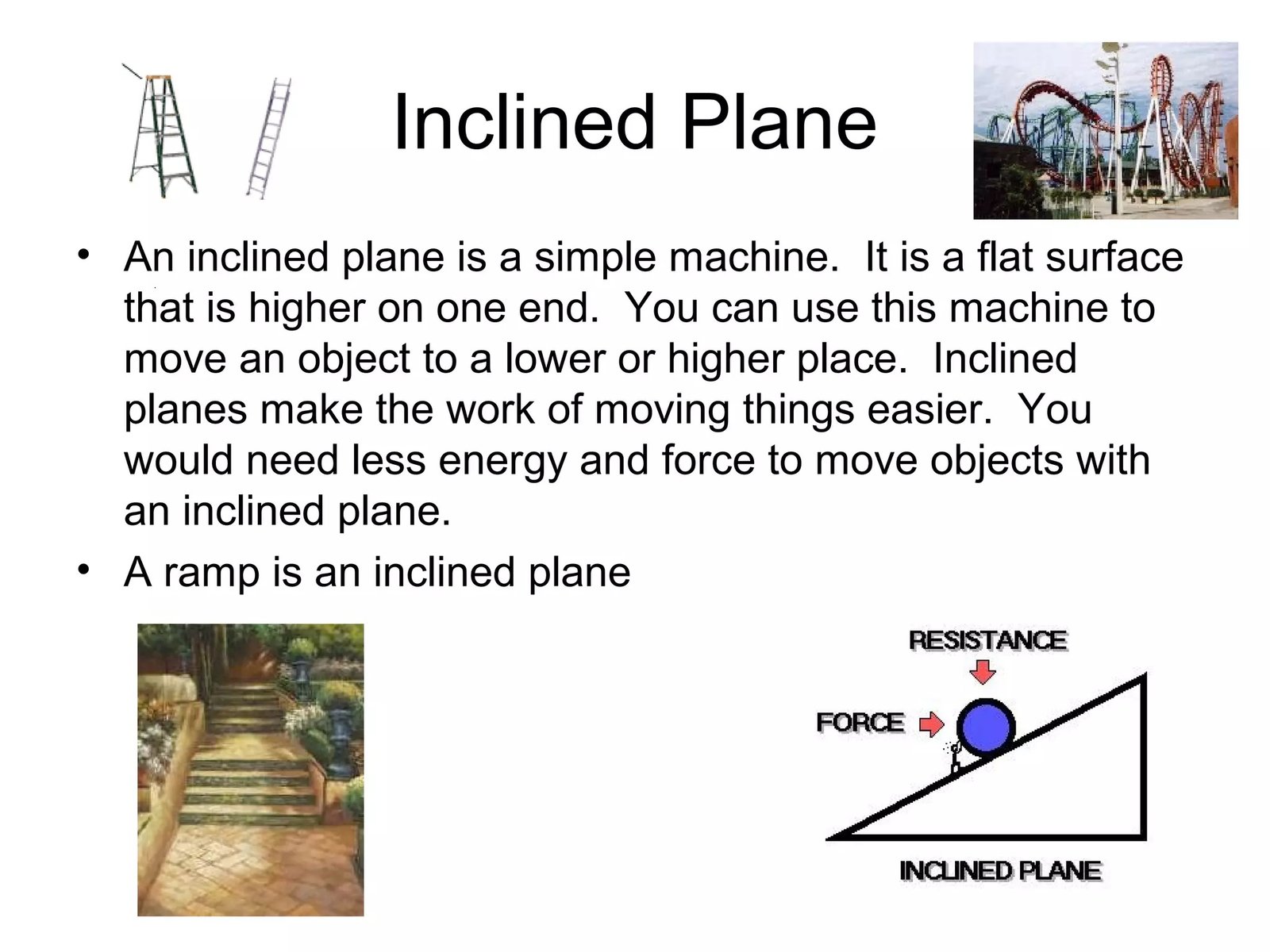
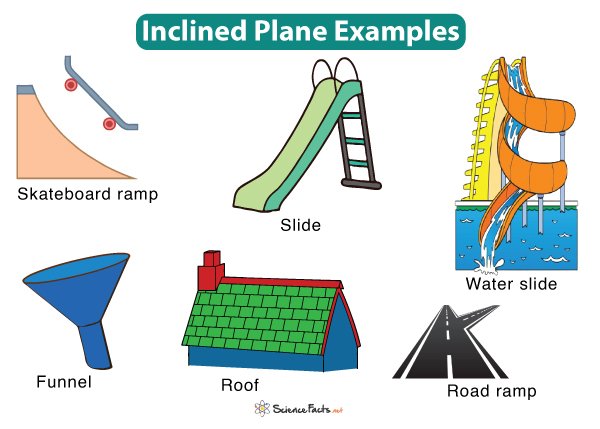
Ramps make the entrances to public
buildings such as schools or post
offices wheelchair accessible. A ramp is
an example of a simple machine called
an inclined plane. An inclined plane
is a straight, slanted surface that can
multiply an effort force. An inclined
plane makes it easier to move a heavy
load upward.
Mechanical Advantage
The mechanical advantage of a ramp
is equal to the output force divided by
the effort force.
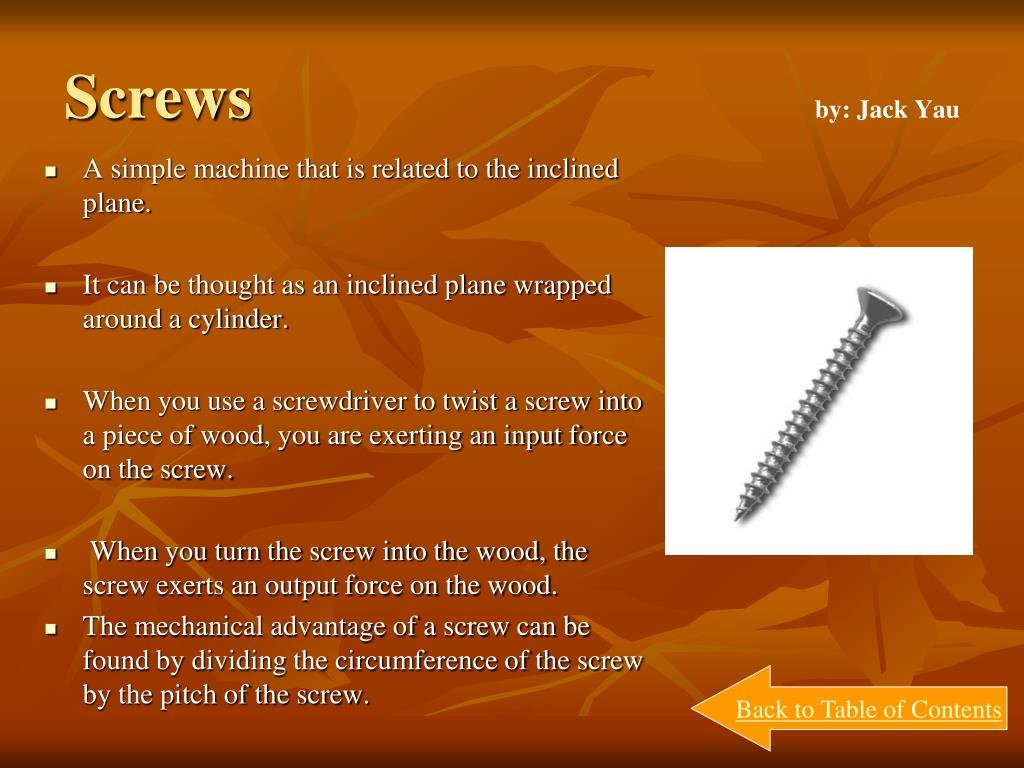
A screw is another simple machine
that can multiply an effort force. A
screw is an inclined plane wrapped
around a central bar. Spiral ridges
called threads move into an object as
the head of the screw turns. The space
between the threads is called the pitch.
A screw’s mechanical advantage is
calculated in a similar way to a ramp’s.
Wedges
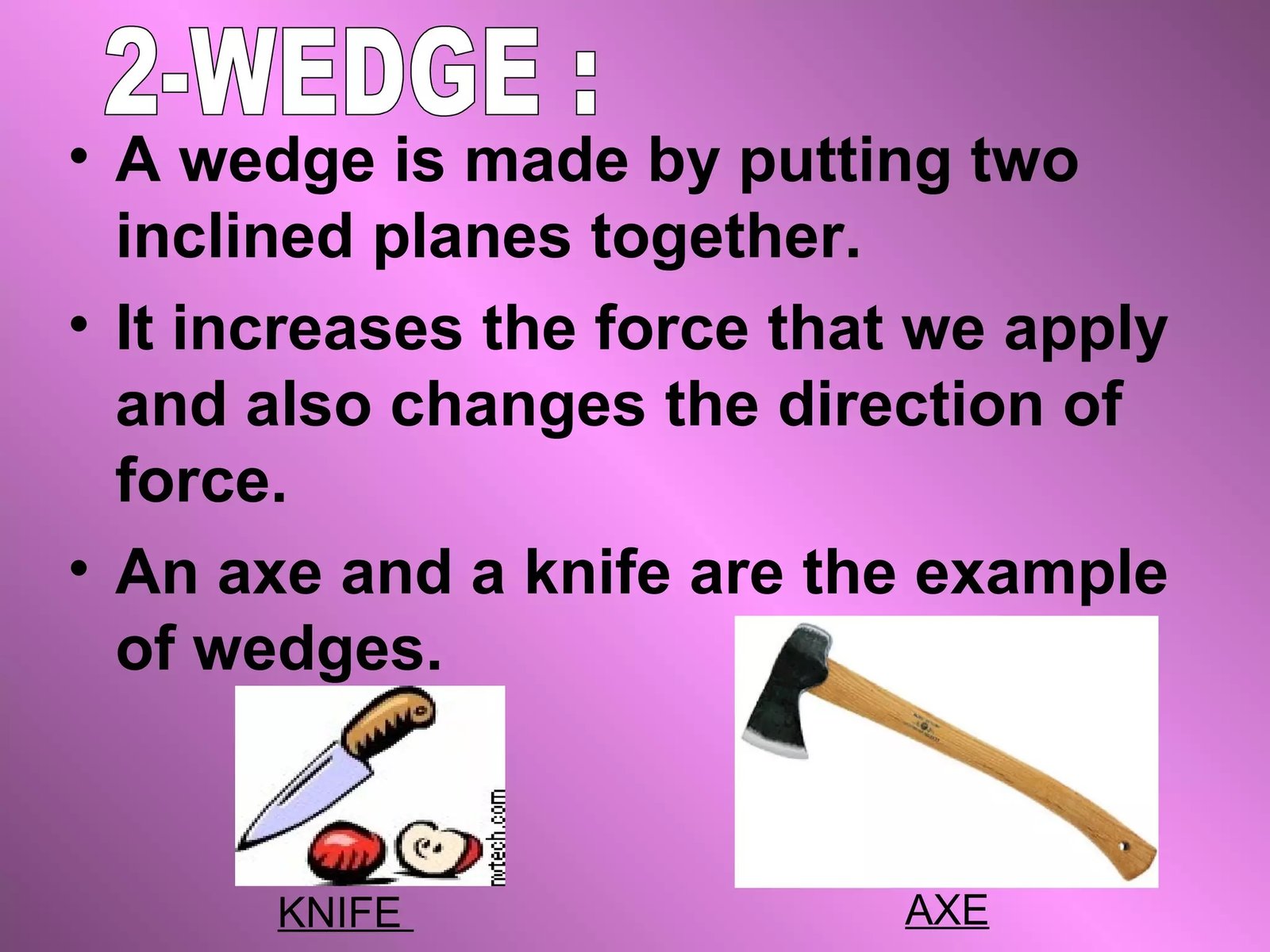
A wedge is an inclined plane that
changes the direction of an applied
effort force. A knife is a wedge. When
you push down on a knife to cut food,
the knife presses sideways against
the food, pushing it apart. A wedge
may be a single inclined plane or two
inclined planes joined back-to-back.
Inclined planes that are longer than
they are high have greater mechanical
advantages.
What are compound machines?
.
Efficiency is the ratio of the work done
by a machine to the work that was put
into it. To calculate efficiency, divide
the output work by the effort work.
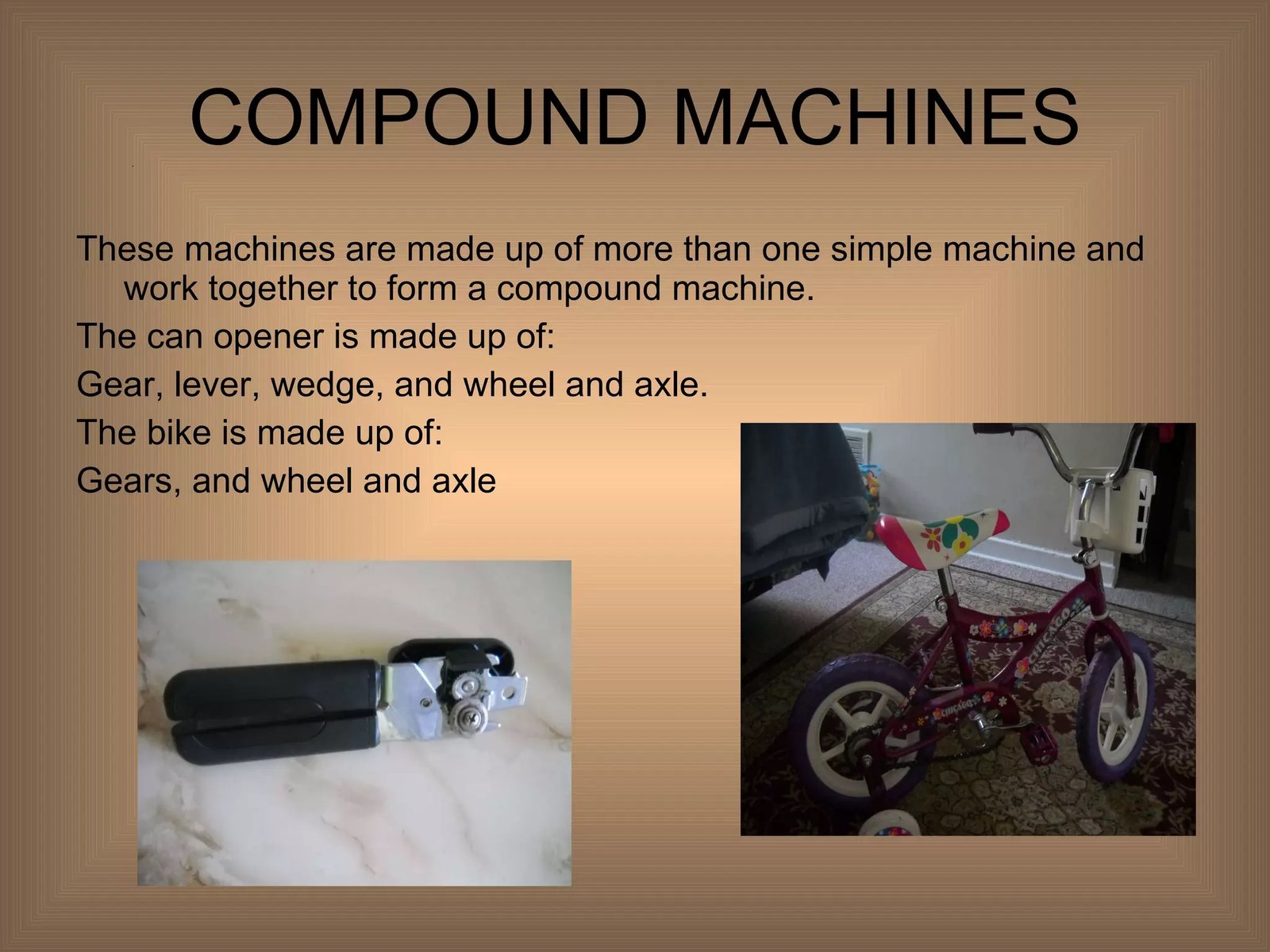
A compound machine is a
combination of two or more simple
machines. For example, scissors include
two levers and two wedges. The pivot
point for the blades and handles is the
fulcrum, and the blades are the wedges.