Science High School Reviewer Physical Science: Classification of Elements and Compounds and Mixtures
Disclosure: This post may contain affiliate links. When you buy through links on my site, I may earn a small commission. Thank you for your support.
You have learned that an element is a substance that cannot be further simplified. Elements are the simple substances that combine to make all other substances. Some common elements are carbon, aluminum, oxygen, and iron.
Elements are made of tiny invisible particles called atoms. An atom is the smallest particle that has the properties of an element.
An element is matter made of only one kind of atom.
Classification of Elements
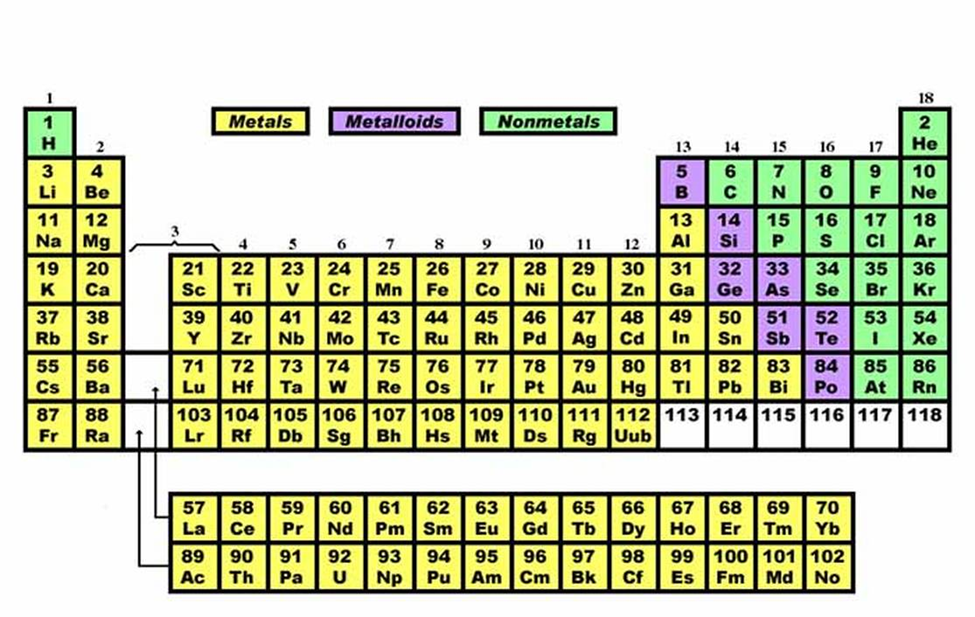
Elements fall into three general categories—metals, metalloids, and nonmetals. The elements in each category have similar properties.
Metals
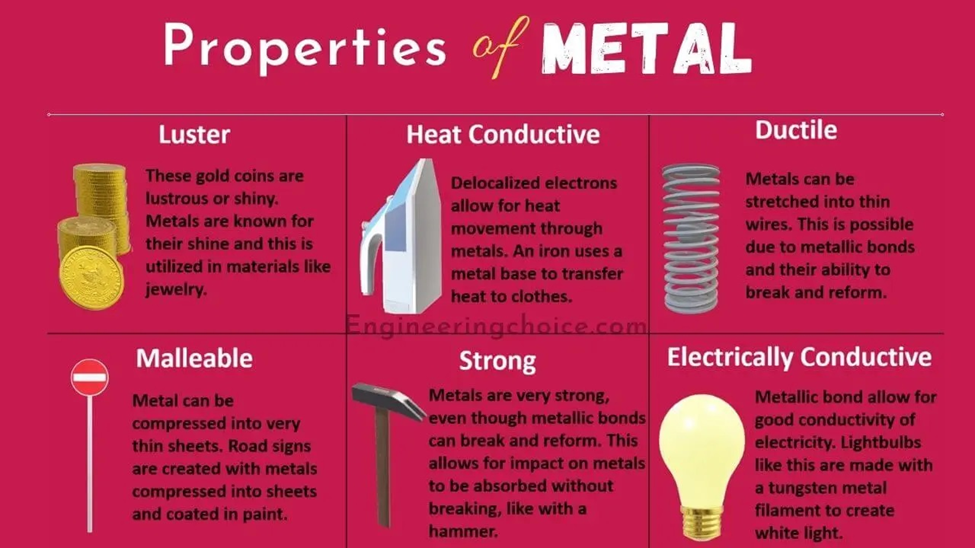
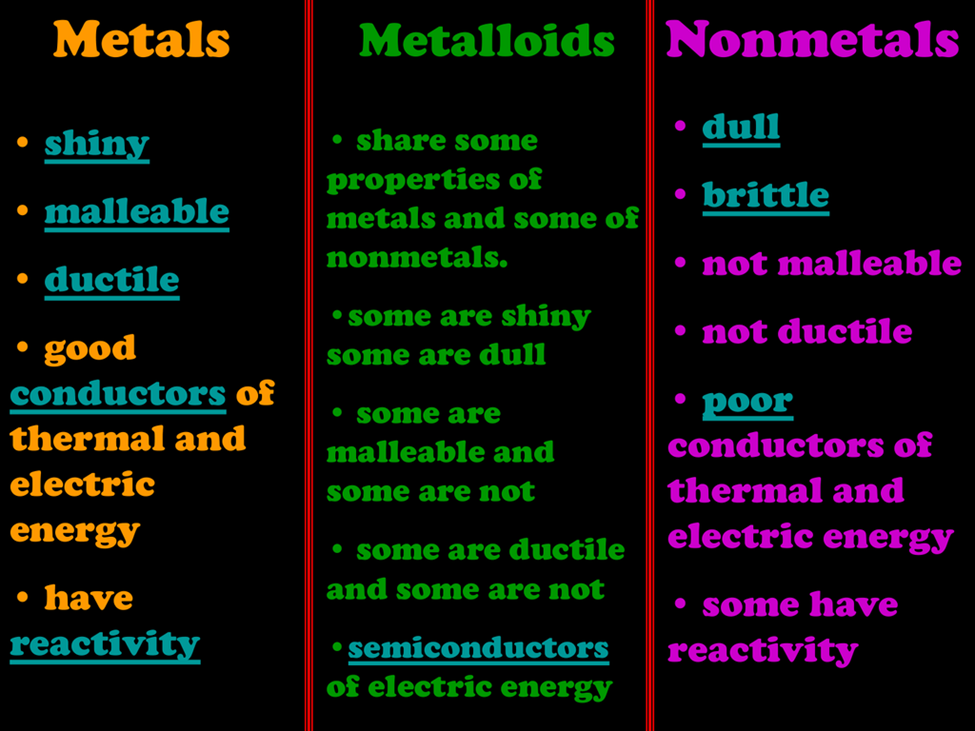
Metals generally have a shiny or metallic luster and are good conductors of heat and electricity. All metals, except mercury, are solids at room temperature. Metals are malleable, which means they can be bent and pounded into various shapes. Metals are also ductile, which means they can be drawn into wires without breaking.
If you look at the periodic table, you can see that most of the elements are metals. Examples of metals include aluminum, iron, copper, gold, and silver. Some metals, such as iron, are magnetic.
Non-metals
Nonmetals are elements that are usually dull in appearance. Most are poor conductors of heat and electricity. Many nonmetals are gases at room temperature; only one nonmetal, bromine, is liquid at room temperature.
The solid nonmetals are generally brittle, meaning they cannot change shape easily without breaking. The nonmetals are essential to the chemicals of life. More than 97 percent of your body is made up of various nonmetals, as shown in Figure 17. You can see that, except for hydrogen, the nonmetals are found on the right side of the periodic table.
Fluorine, chlorine, bromine, iodine, and astatine are known as halogens.
These nonmetallic elements all have a strong unpleasant odor and they burn flesh. They react with most metals and many nonmetals.
Helium, neon, argon, krypton, xenon, and radon are known as noble gases. These nonmetallic elements are considered to be inert, which means in a state of doing little or nothing. Scientists think this is because these elements rarely react with other elements.
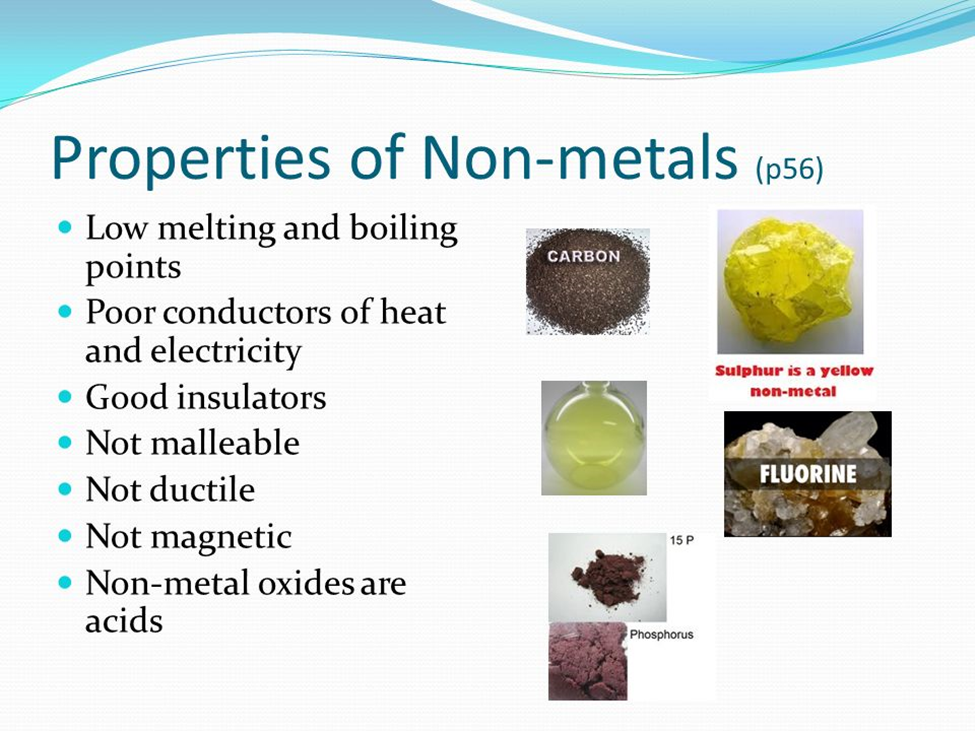
Nonmetals are elements that are usually dull in appearance. Most are poor conductors of heat and electricity. Many nonmetals are gases at room temperature; only one nonmetal, bromine, is liquid at room temperature.
The solid nonmetals are generally brittle, meaning they cannot change shape easily without breaking. The nonmetals are essential to the chemicals of life. More than 97 percent of your body is made up of various nonmetals, as shown in Figure 17. You can see that, except for hydrogen, the nonmetals are found on the right side of the periodic table.
Fluorine, chlorine, bromine, iodine, and astatine are known as halogens.
These nonmetallic elements all have a strong unpleasant odor and they burn flesh. They react with most metals and many nonmetals.
Helium, neon, argon, krypton, xenon, and radon are known as noble gases. These nonmetallic elements are considered to be inert, which means in a state of doing little or nothing. Scientists think this is because these elements rarely react with other elements.
Metalloids
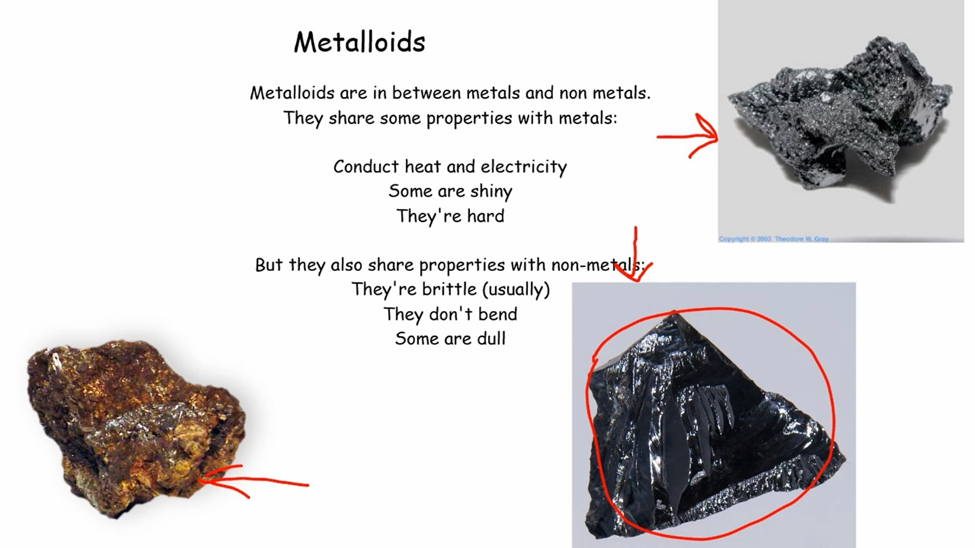
Metalloids are elements that have characteristics of metals and nonmetals. On the periodic table, metalloids are found between the metals and nonmetals. All metalloids are solids at room temperature. Some metalloids are shiny and many are conductors, but they are not as good at conducting heat and electricity as metals are. Some metalloids, such as silicon, are used to make the electronic circuits in computers, televisions, and other electronic devices.
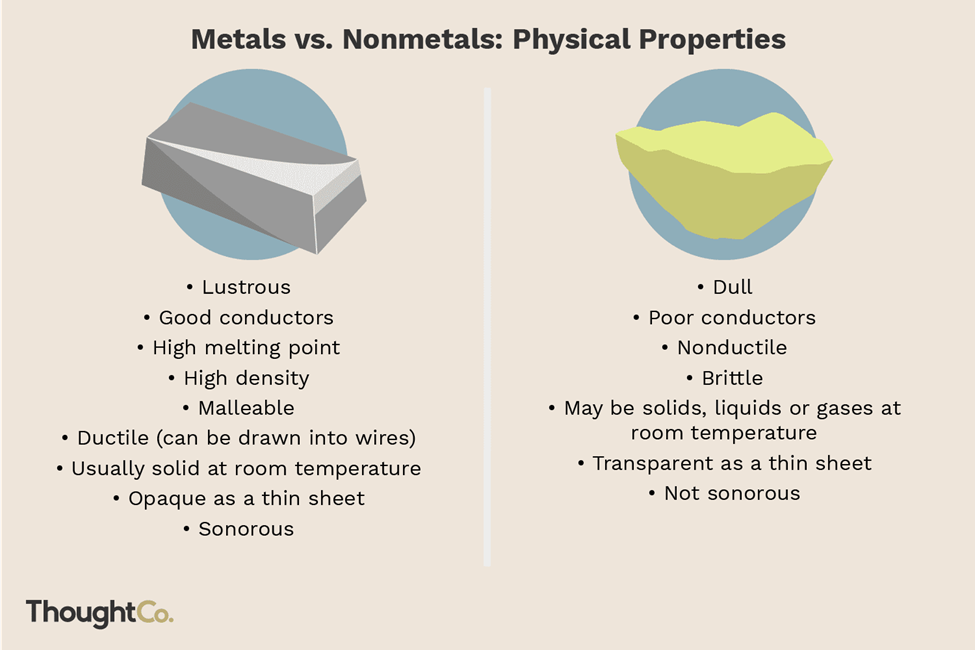
Here’s a chart summarizing the properties of metals, nonmetals, and metalloids:
Compounds and Mixtures
Substances
Scientists classify matter in several ways that depend on what it is made of and how it behaves. For example, matter that has the same composition and properties throughout is called a substance. Elements, such as a bar of gold or a sheet of aluminum, are substances. When different elements combine, other substances are formed.
Compounds
A compound is a substance whose smallest unit is made up of atoms of more than one element bonded together.
Compounds often have properties that are different from the elements that make them up. Water is distinctly different from the elements that make it up. It is also different from another compound made from the same elements. Have you ever used hydrogen peroxide (H2O2) to disinfect a cut? This compound is a different combination of hydrogen and oxygen and has different properties from those of water.
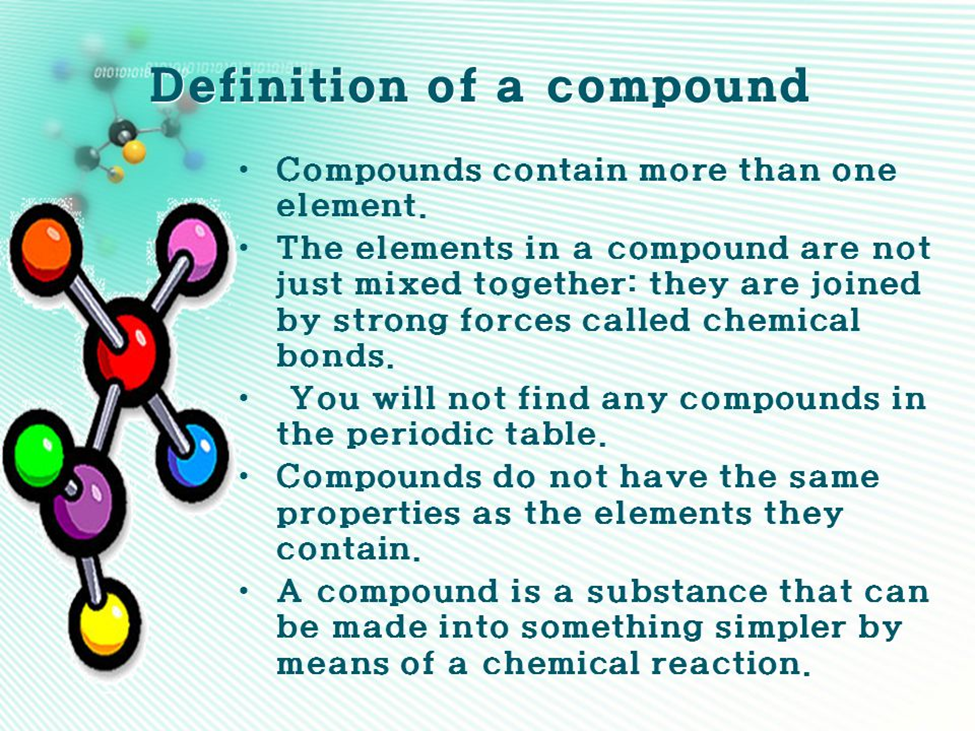
A compound is formed when the atoms of two or more elements combine. Sugar molecules are formed when the atoms of carbon, hydrogen, and oxygen chemically combine to form a white, sweet substance.
A chemical change occurs when atoms join to form compounds, and also when they break apart. The atoms might rearrange as elements or they might join atoms of other elements to form new compounds.
Chemists also give compounds a chemical formula. A chemical formula has symbols to show which elements have combined to form that particular compound. A formula also has numbers to the lower right of the element symbols. These numbers are called subscripts. Subscripts indicate the number of atoms that have combined.
Compounds in everyday life
Chemists and chemical engineers have learned how to produce products from compounds that make our lives much easier. Products from crude oil are an important example. Petroleum engineers can obtain gasoline, kerosene, lubricating oils, diesel fuel, heating oil, and light fuel gases from crude oil. All of these products are hydrocarbons, which are molecules that are composed of hydrogen and carbon.
Rubber is a flexible material that is formed from long strings of hydrocarbons. Rubber is used to make products such as car tires, erasers, and shoe soles. It is also used to cover electrical wires and make hoses that hold fluids in car engines and in washing machines.
Plastics are made from long strings of carbon with oxygen, nitrogen, chlorine, or sulfur. When heat and pressure are applied, plastics can be formed into different shapes. Plastics are used in many of the products we use every day, including eyeglass lenses, paints, food and drink containers, and carpets. Plastics are used to make boats, automobile bodies, and furniture. Some plastics are also used to make clothes.
Cloth and fabric are made of fibers that are woven together. Some cloths and fabrics are prepared with natural compounds like wool or cotton. Others are made with man-made compounds like nylon or polyester.
Mixtures
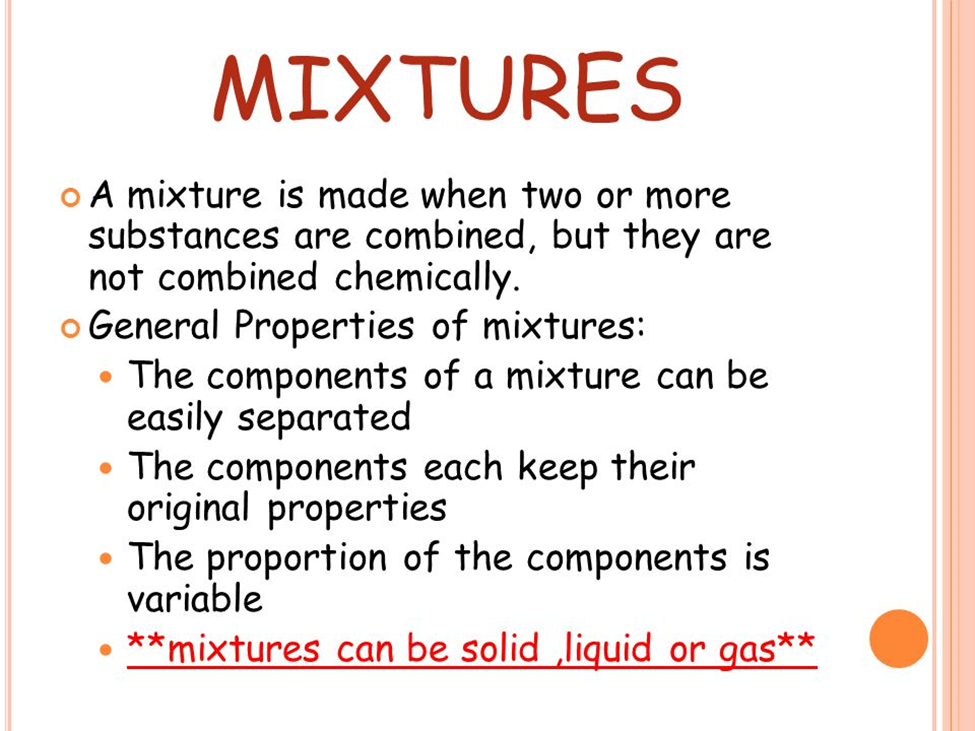
When two or more substances (elements or compounds) come together but don’t combine to make a new substance, a mixture results. Unlike compounds, the proportions of the substances in a mixture can be changed without changing the identity of the mixture.
For example, if you put some sand into a bucket of water, you have a mixture of sand and water. If you add more sand or more water, it’s still a mixture of sand and water. Its identity has not changed. Air is another mixture. Air is a mixture of nitrogen, oxygen, and other gases, which can vary at different times and places. Whatever the proportion of gases, it is still air. Even your blood is a mixture that can be separated, as shown in Figure 20, by a machine called a centrifuge.
The layers in this blood sample include plasma, platelets, white blood cells, and red blood cells.
Homogeneous or Heterogeneous
Mixtures, such as the ones shown in the chart, can be classified as homogeneous or heterogeneous.
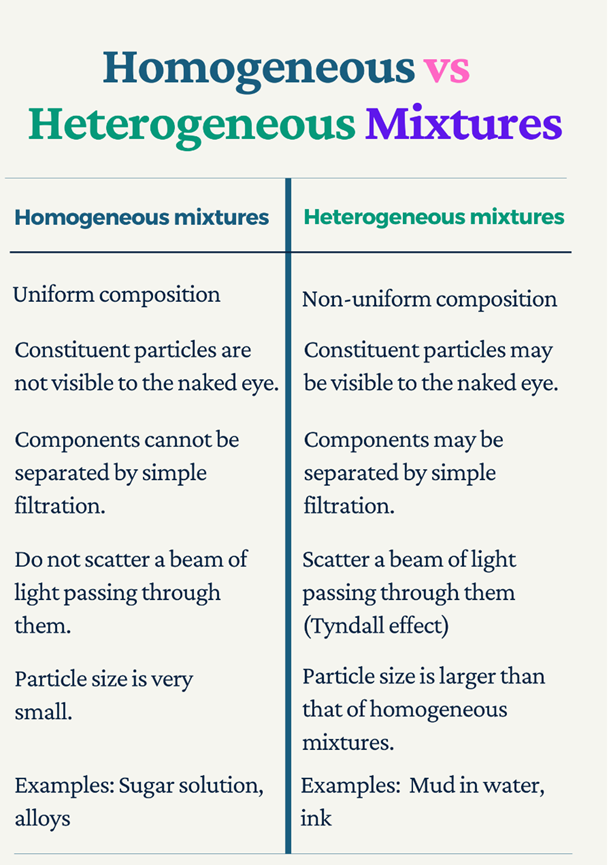
Homogeneous means “the same throughout.” You can’t see the different parts in this type of mixture. Example: brass. Homogeneous mixtures can be solids, liquids, or gases.
A heterogeneous mixture has larger parts that are different from each other. You can see the different parts of a heterogeneous mixture, such as sand and water. How many heterogeneous mixtures are in Figure 21? A pepperoni and mushroom pizza is a tasty kind of heterogeneous mixture. Other examples of this kind of mixture include tacos, vegetable soup, a toy box full of toys, or a toolbox full of nuts and bolts.
We classify mixtures according to certain properties. In heterogeneous mixtures, separate particles are big enough to see. Trail mix and tossed salad are examples of heterogeneous mixtures. Can you see the separate bits?
Mixtures that look the same throughout are homogeneous mixtures. In homogeneous mixtures, the particles are too small to see.
Milk, a liquid, and cream cheese, a solid, are examples of homogeneous mixtures. They both look the same throughout because you can’t see the individual particles.
Some mixtures separate by themselves when their parts settle out into layers. We call this type of mixture a suspension. A suspension is a mixture whose particles settle and separate within a few hours. In some suspensions, particles settle into layers quickly. Oil and vinegar as a salad dressing, for example, can be shaken into a smooth-looking mixture. However, the oil layers out on top of the vinegar in a matter of minutes.
If the particles in a mixture are the size of atoms or molecules, the mixture is called a solution.
$ Air is both a mixture (homogenous) and a solution
This happens when one substance dissolves in another, like sugar in water. All solutions are homogeneous, which means they have the same makeup throughout. Solutions may be colored, but if they are liquid or gas they are always transparent, like window cleaner solution or air.
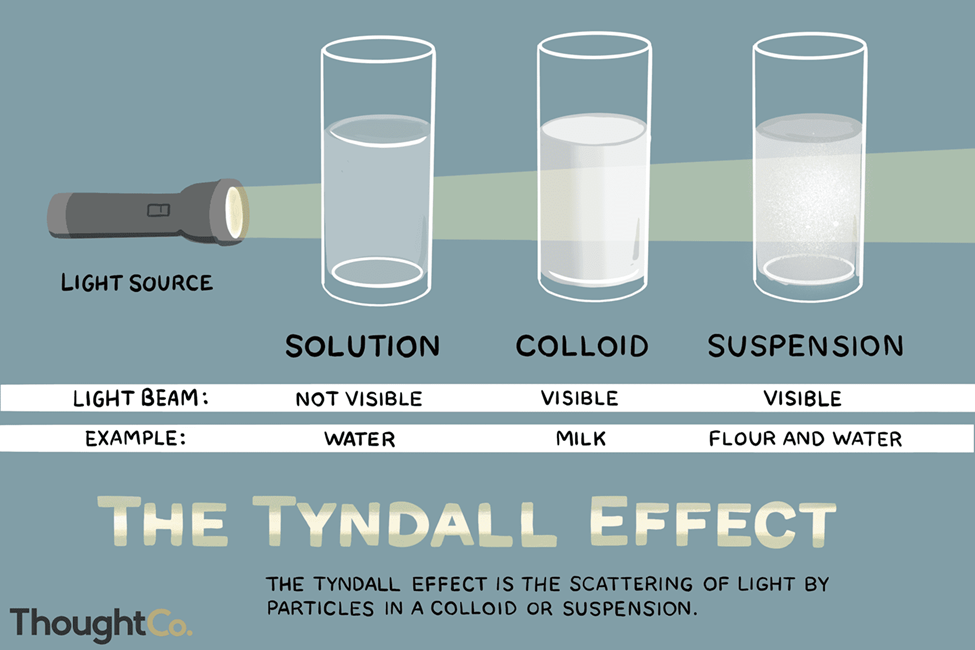
Kinds of Mixtures
Suspension
A suspension is a mixture made of parts that separate upon standing. Products that are suspensions, such as certain types of sauces and dressings, are often marked, “Shake well before using.”
To make a suspension, add fine sand to a bottle of water. Shake it, and watch the particles move.
Soon, the sand particles will separate from the water and settle to the bottom of the bottle. Very fine particles, however, often remain suspended for a long time. You can also separate fine particles by using a filter.
Emulsions
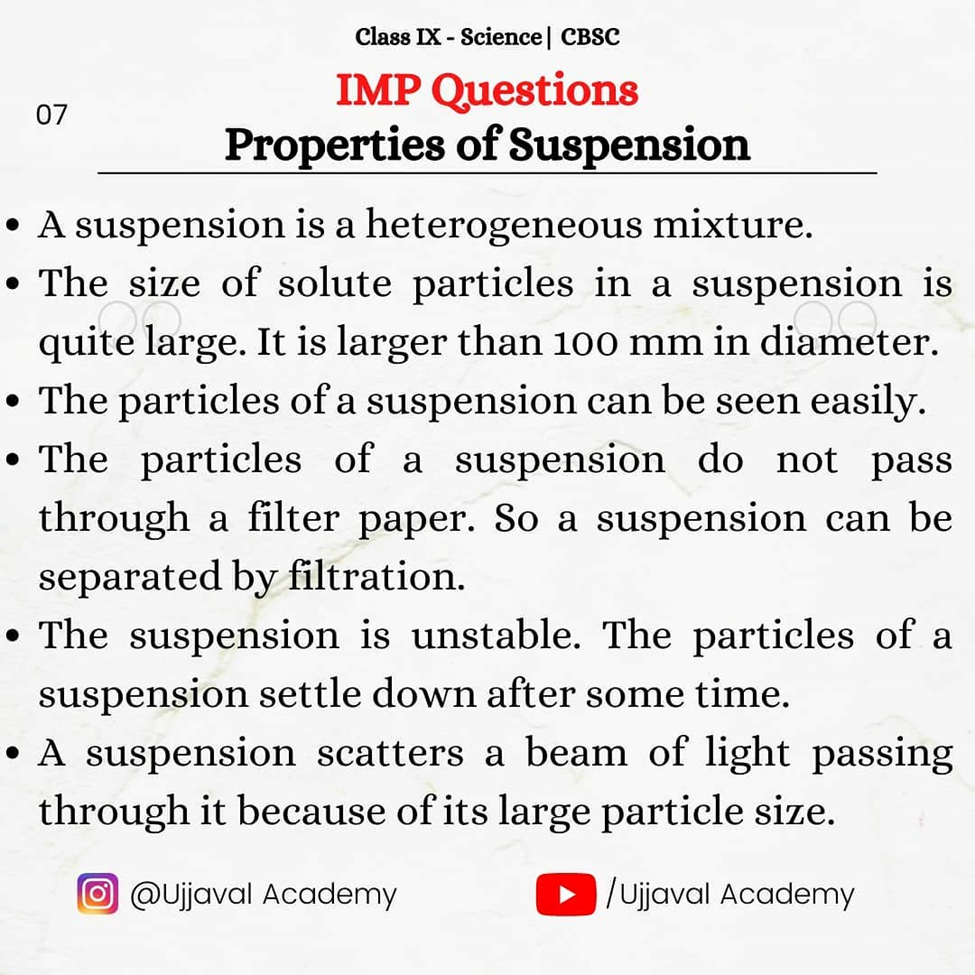
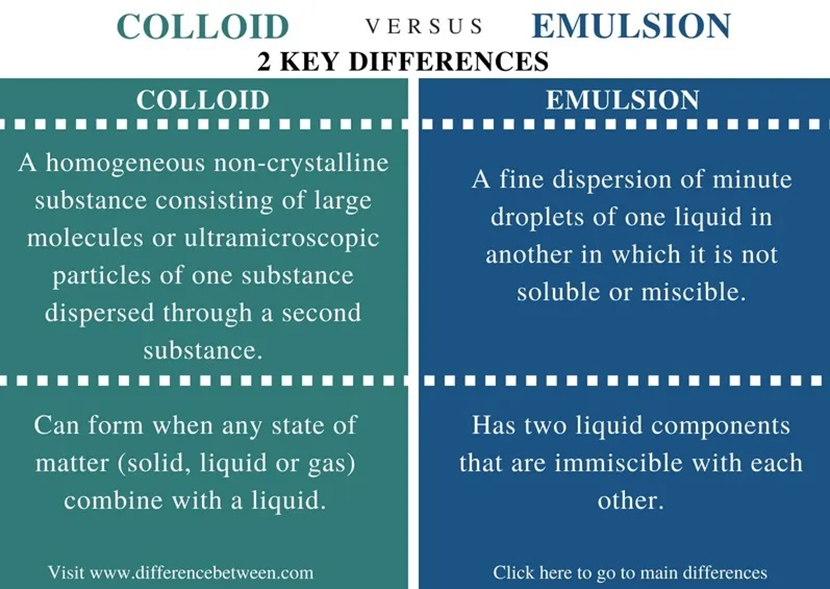
An emulsion is a suspension of two liquids that usually do not mix together. Emulsions are stable homogeneous mixtures of very small droplets suspended, rather than dissolved, in a liquid. Many food products and toothpastes are emulsions.
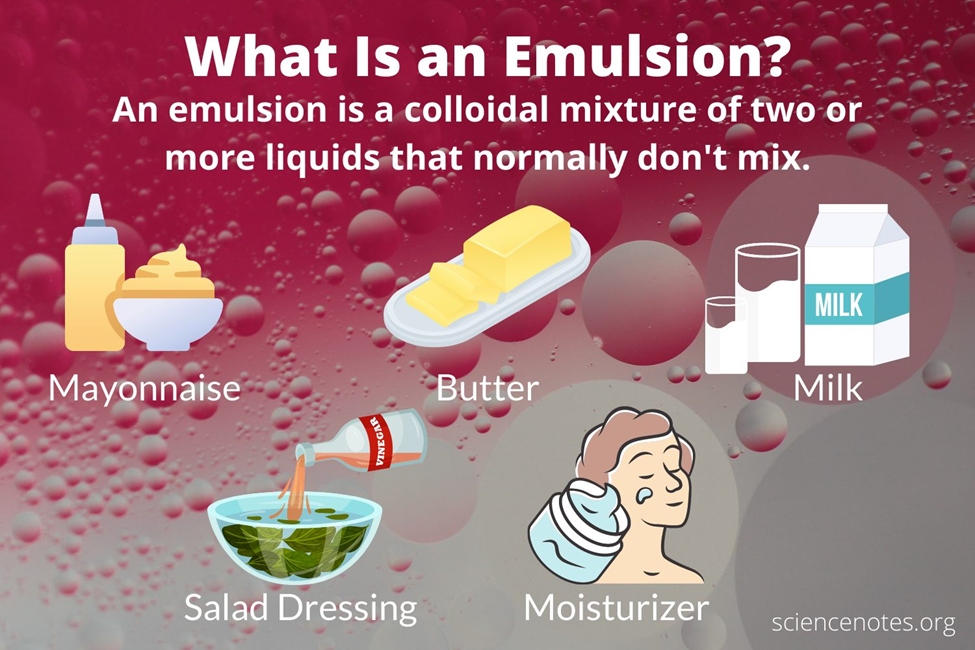
Colloids
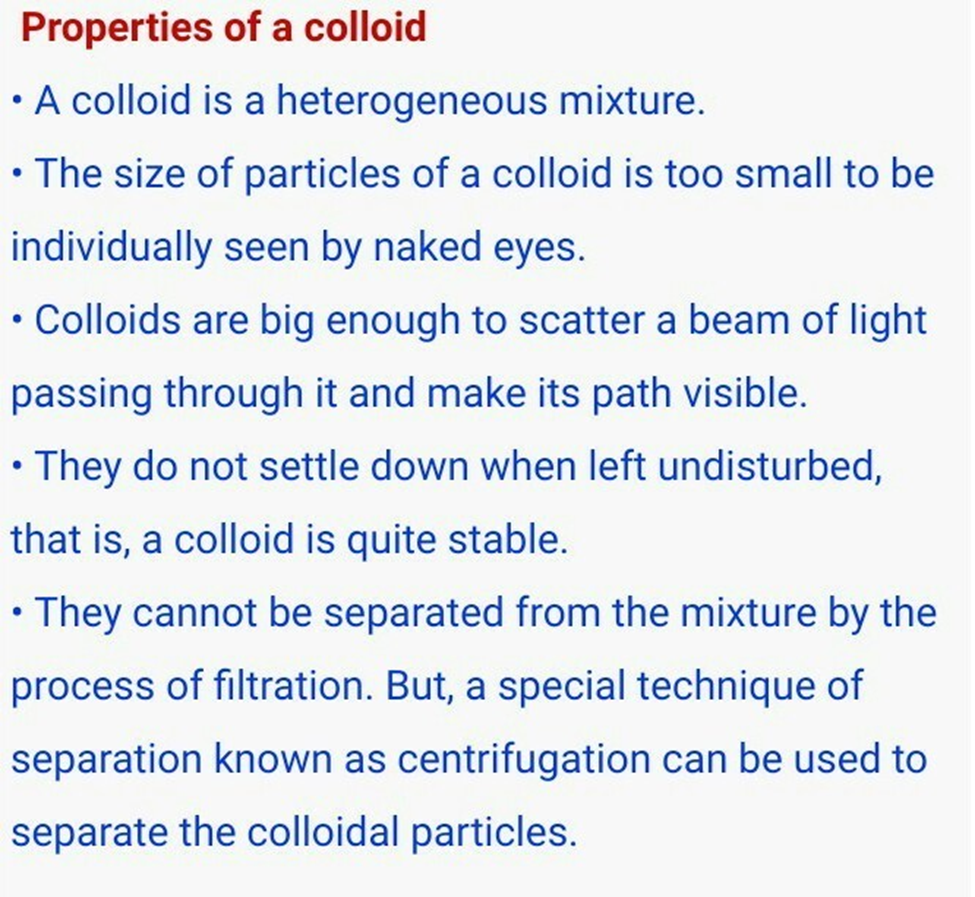
A colloid is a stable homogeneous mixture in which very small, fine particles of one material are scattered throughout another material, blocking the passage of light without settling out. Fog is a colloid, because it is a mixture of fine water droplets with other air molecules. In a colloid, undissolved particles or droplets stay mixed in another substance. Fog is a liquid-in-gas colloid. Smoke is a solid-in-gas colloid. Nonfat milk is a solid-in-liquid colloid.
Are solutions homogeneous mixtures?
Have you ever mixed salt in water? What happened? The salt may have seemed to disappear, but it was still there. The salt dissolved, or separated into tiny particles. Salt water is a solution, a mixture of one substance dissolved in another. The properties of a solution are the same throughout the mixture. Solutions are similar to colloids. Both are homogeneous mixtures, but the particles in solutions are smaller than those in colloids.
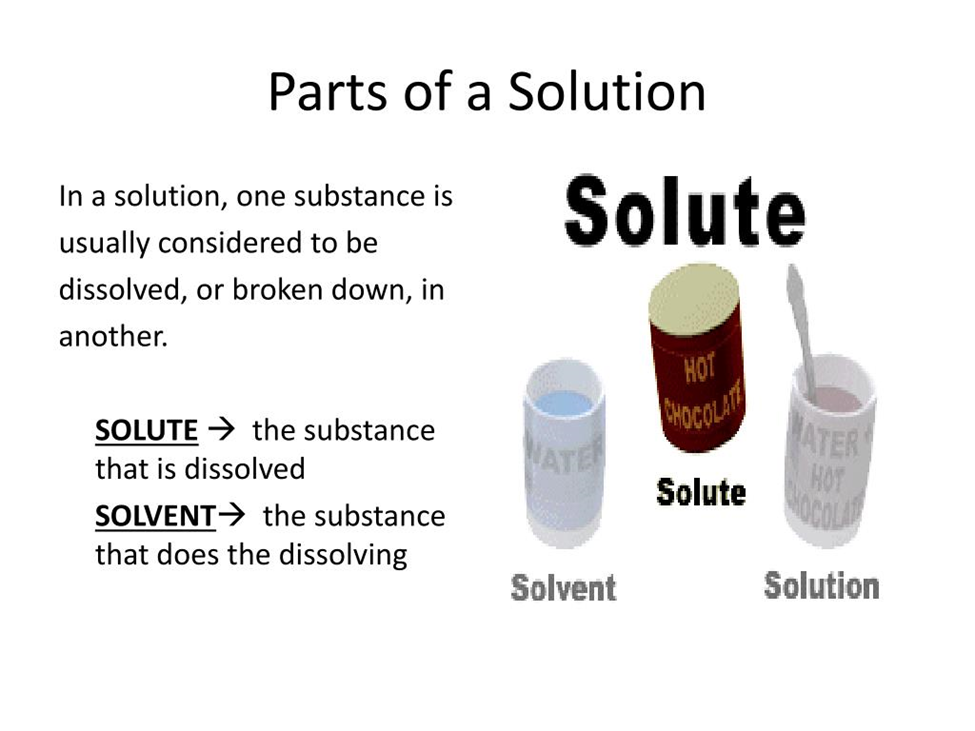
Solutions have two parts. The solute is the substance that dissolves. The solvent is what the solute dissolves in.
Many metals form substances called alloys. Alloys are mixtures of one or more metals with other solids. Most alloys are solutions. Alloys are made by heating, melting, and mixing the parts together. The solution then cools and hardens, but the parts remain dissolved.
Steel is an alloy made mostly of iron and carbon. It is very strong, so it is used in building construction. Bronze and brass are both alloys that contain copper. Bronze consists of copper and tin, and brass is a mixture of copper and zinc.
Solubility in Solutions
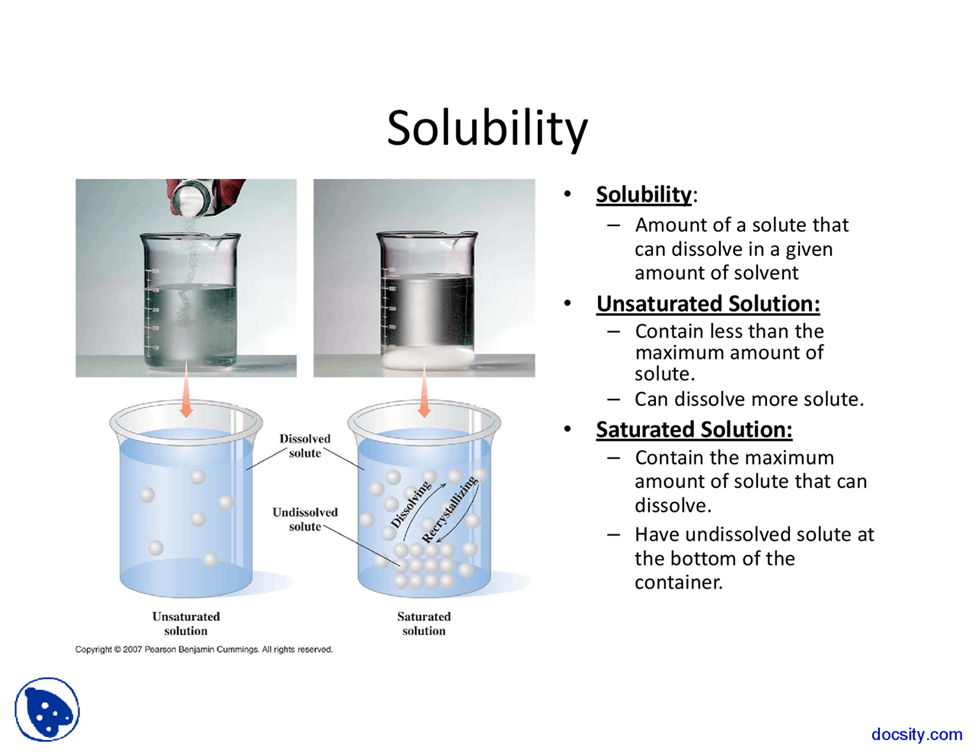
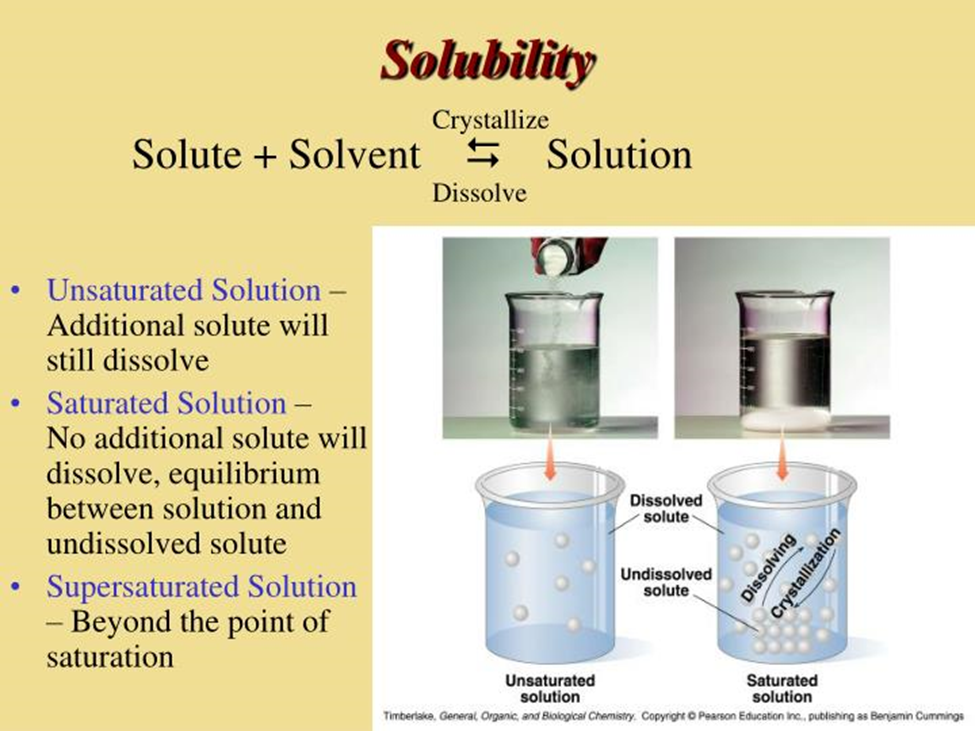
When you mix cocoa powder with water, you make a solution. If you put only a few specks of cocoa powder in the water, the solution is diluted, which means that there are not many particles dissolved in it.
If you add two spoonfuls of powder to the water, the cocoa becomes concentrated, which means that more particles are dissolved in it.
If you pour the entire box of cocoa mix into the water, the powder will not all dissolve. Some of it will settle to the bottom of the cup. When this happens the solution is saturated; no more solute will dissolve.
Solubility is a physical property of solutes in different solvents. It describes the amount of a substance that can dissolve in a solvent.
Stirring a solution or breaking the solute into smaller pieces can help a substance dissolve more quickly. Heat may also affect the solubility of a solid. Heating a solution can allow more solute to dissolve. Heat may also speed up the process of dissolving.
What are the parts of a solution?
Solutions always have a part called the solvent, which does the dissolving, and a part called the solute, which gets dissolved. For example, we can make a solution by stirring a spoonful of sugar crystals into a glass of water. The crystals seem to disappear, but you could detect their presence by tasting the solution. The water dissolves the sugar, so it is the solvent. The sugar crystals get dissolved, so they are the solute.
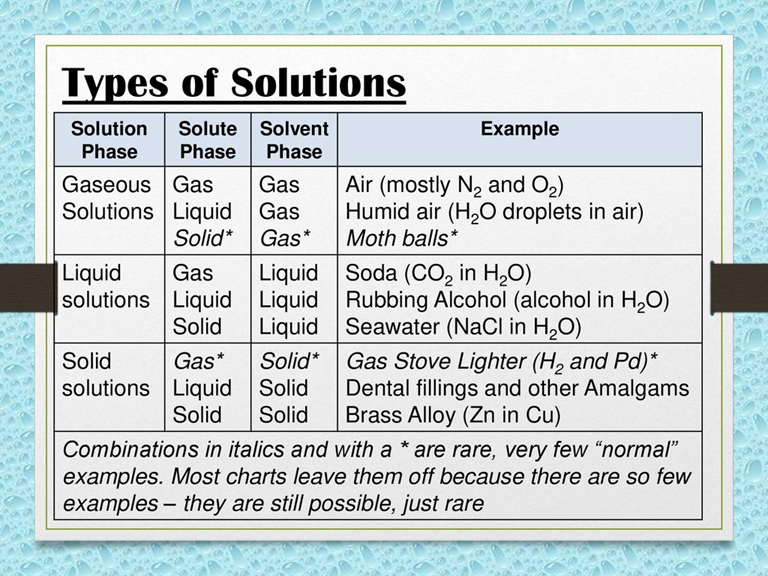
In liquid-liquid, gas-gas, and solid-solid solutions, the solvent is the part that is present in the greater amount. Air is a good example of this situation.
Air is about 78% nitrogen and 21% oxygen.
The solvent in air is nitrogen and the oxygen is a solute.
The greatest amount of solute that a given amount of solvent can dissolve is called the solubility of the solute. So for the table salt, its solubility is 37 grams per 100 grams of water in room temperature.
Separating Mixtures
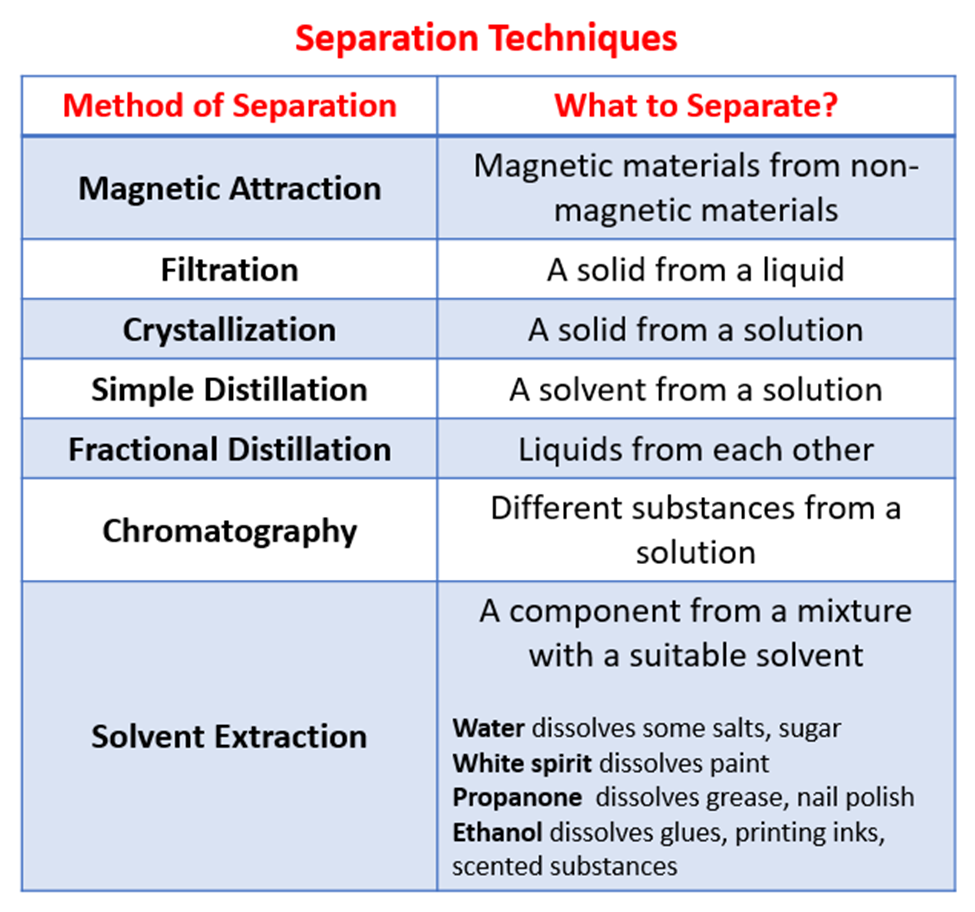
Mixtures are physical combinations of different substances. They can be separated by physical changes based on their different properties. In some cases this may be easy, whereas in other cases it may be difficult.
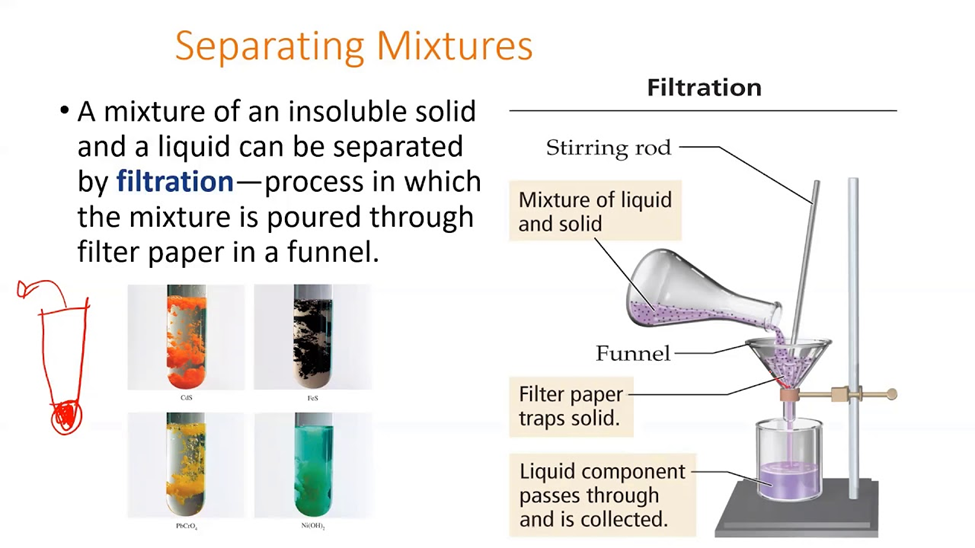
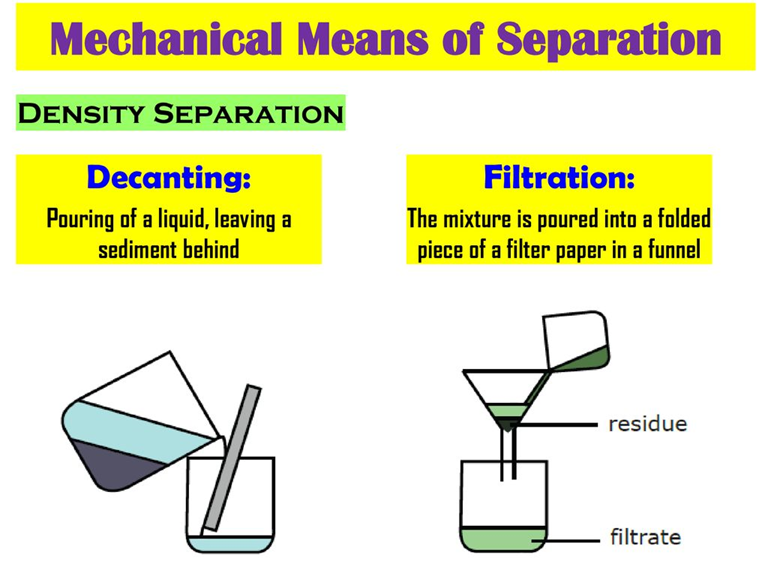
One of the most common methods of separating a liquid and a solid is filtration. Filtration separates substances that have particles of different sizes. A filter is a material with fine holes. Small particles pass through the holes, large particles do not.
If the two substances in a mixture differ in density, it may be possible to use water to separate them by means of flotation. For example, a mixture of sand and sawdust in a container can be separated by pouring in water.
The sawdust has a lower density so it floats to the top, while the heavier sand remains at the bottom.
Separating mixtures can also be done by using solubility. For example, suppose you have sugar mixed with sand in a glass. Pouring water into the glass will dissolve the sugar, while the sand remains solid. Filtering the sugar solution into another glass separates it from the sand. The sugar is recovered when the water in the glass evaporates.
Magnetism also can be used to separate some mixtures. If you have iron filings mixed with sand, a magnet can be used to separate the iron pieces from the sand. The magnet will only attract the metal pieces, while the sand remains behind.
Sometimes you can use a liquid to separate a mixture of solids. For example, if you add water to a mixture of sugar and sand, only the sugar dissolves in the water. The sand then can be separated from the sugar and water by pouring the mixture through a filter. Heating the remaining solution will separate the water from the sugar.
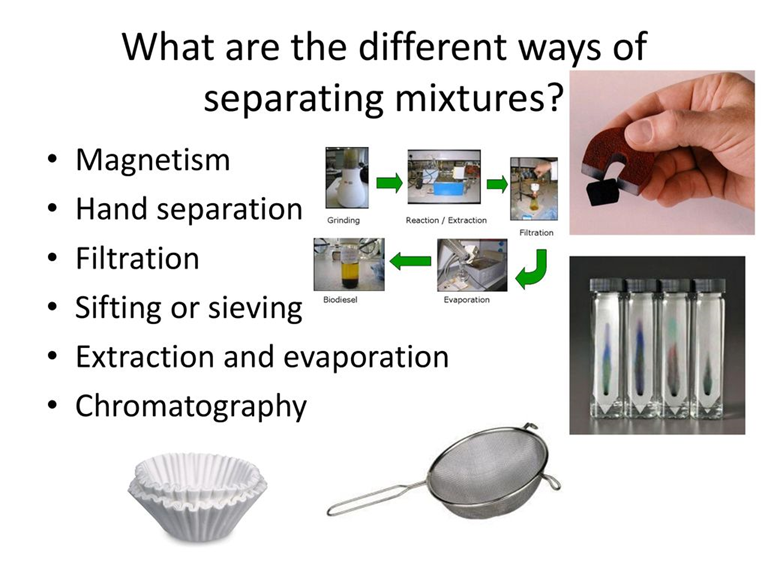
At other times, separating a mixture of solids of different sizes might be as easy as pouring them through successively smaller sieves or filters. A mixture of marbles, pebbles, and sand could be separated in this way.