Science High School Reviewer Physical Science: The Structure of Matter
Disclosure: This post may contain affiliate links. When you buy through links on my site, I may earn a small commission. Thank you for your support.
The Atom
All matter is composed of atoms.
The term atom comes from a Greek word that means “cannot be divided.”
An atom is the smallest unit that has the properties of an element.
This means that once you split an atom, you do not get smaller pieces of the element. Instead, what you get is the particles that form all atoms.
Parts of an atom
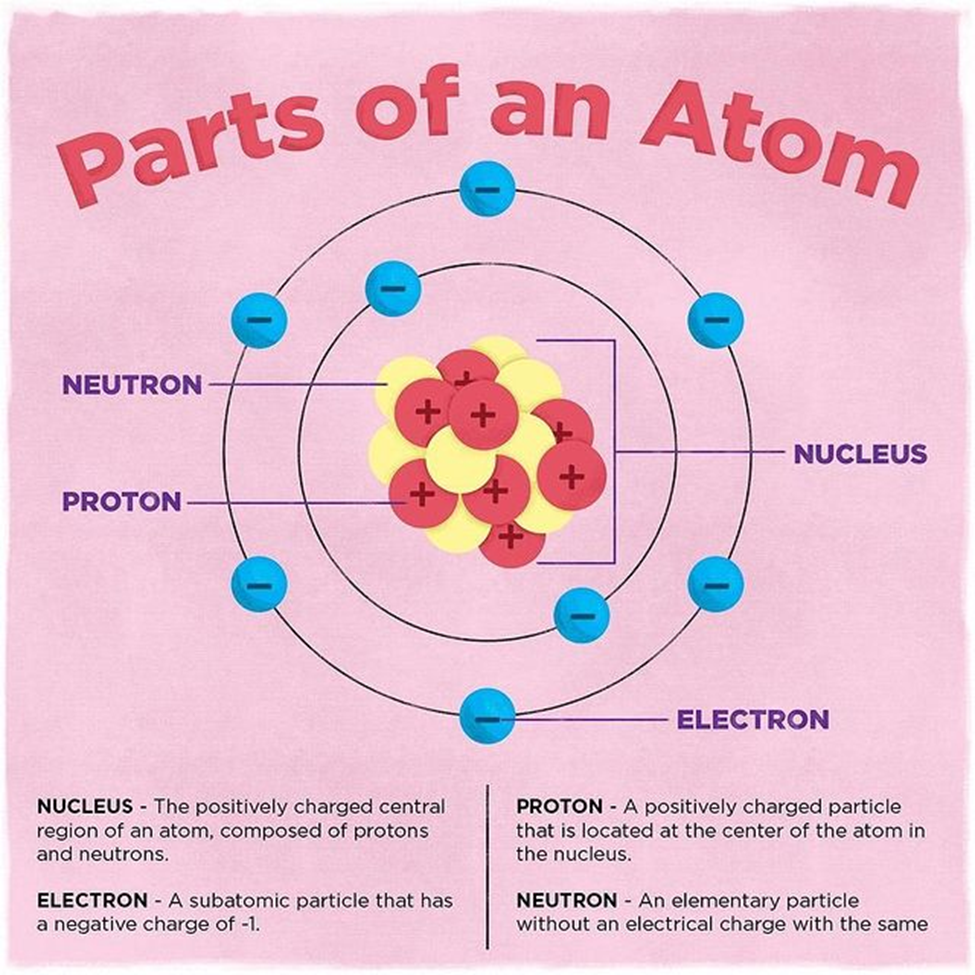
The particles that make up all atoms are protons, neutrons, and electrons. Protons are located in the nucleus, at the center of the atom. Neutrons are also located in the nucleus.
Electrons are located outside the nucleus. Scientists have not been able to observe electrons directly because they are too small. However, they have inferred that electrons rotate around the nucleus.
Atoms of different elements have different numbers of protons, neutrons, and electrons.
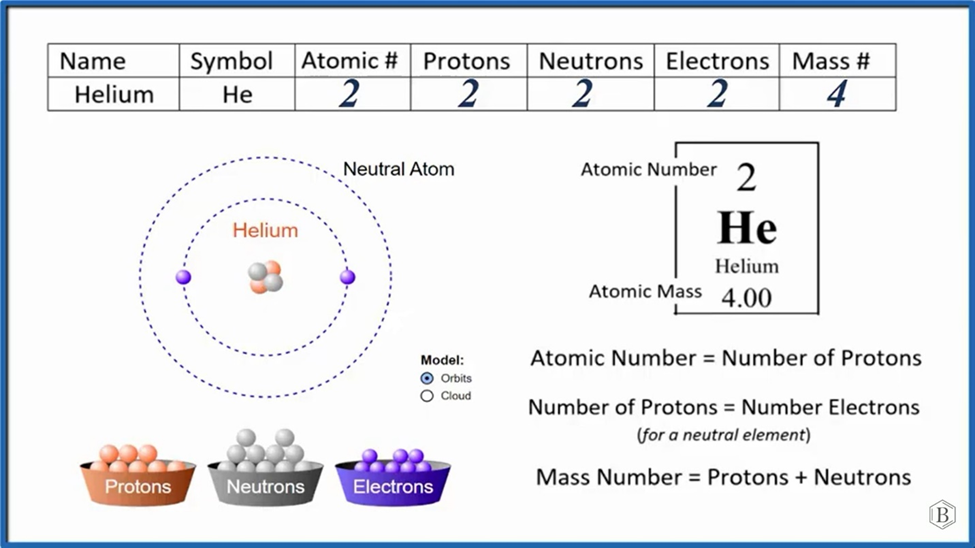
The atomic number is the number of protons in an atom. Every element has a different atomic number. This number determines the identity of the atoms of the element. For example, only helium atoms have 2 protons in their nucleus, only magnesium atoms have 12 protons in their nucleus, and only carbon atoms have 6 protons in their nucleus.
Another important number is the atomic weight. The atomic weight of an atom is a measure of the mass of its atoms. The atomic weight is calculated by adding the number of protons and the number of neutrons together.
Elements
An element is a substance that cannot be further simplified. Elements are the simple substances that combine to make all other substances. Some common elements are carbon, aluminum, oxygen, and iron.
Elements are made of tiny invisible particles called atoms. An atom is the smallest particle that has the properties of an element.
An element is matter made of only one kind of atom. At least 110 elements are known and at least 90 of them occur naturally on Earth. These elements make up gases in the air, minerals in rocks, and liquids such as water.
Examples of naturally occurring elements include the oxygen and nitrogen in the air you breathe and the metals gold, silver, aluminum, and iron. The other elements are known as synthetic elements. These elements have been made in nuclear reactions by scientists with machines called particle accelerators.
Determining the number of protons, electrons, and atomic mass (or mass number)
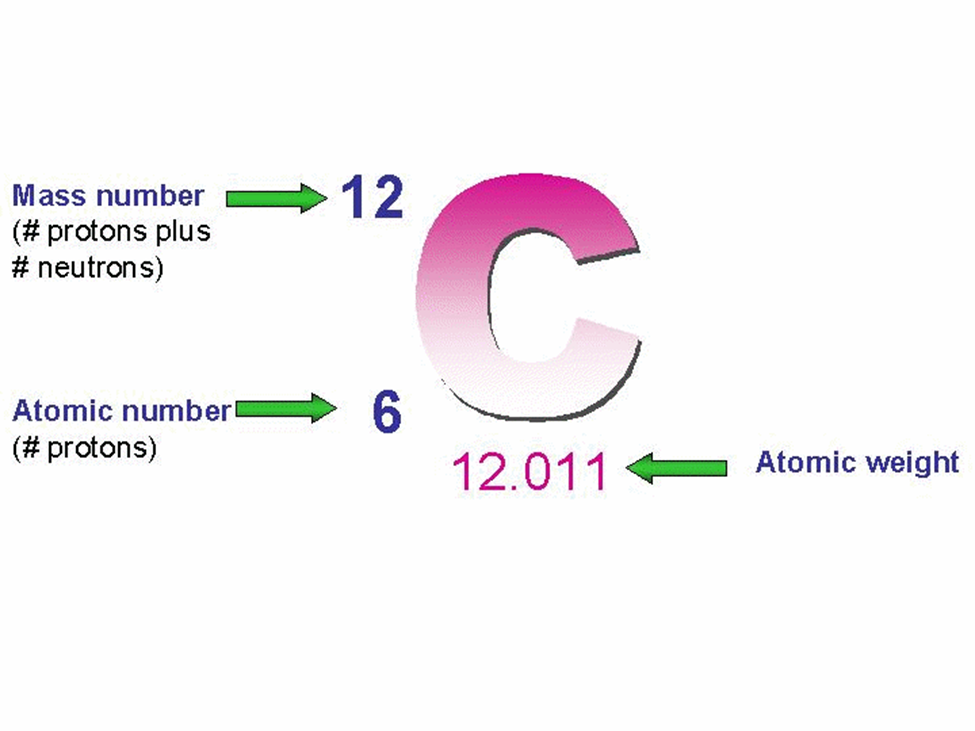
The figure above shows the mass number, atomic number, and atomic weight of the element Carbon.
The atomic number is the number of protons in an element
The atomic number is what determines the identity of an atom.
The atomic number for carbon (shown above) is 6 so carbon has 6 protons.
Because all atoms are neutral (no charge) in their natural state, the number protons (positive charges) equals the number of electrons (negative charges)
Carbon has 6 electrons because it has 6 protons.
The atomic mass is equal to the number of protons AND neutrons (protons plus neutrons)
The number of neutrons is calculated by subtracting the number of protons (the atomic number) from the atomic mass (round the atomic mass to the nearest whole number).
Using the the example above, we see that:
Carbon has 6 neutrons.
Atomic Mass = 12.01
Atomic Mass rounded = 12
Atomic Number (Number of Protons) = 12
Number of Neutrons = Atomic Mass – Atomic Number (Number of Protons)
Number of Neutrons = 12 – 6 = 6
Molecules
The atoms of some elements are naturally found as molecules. A molecule is a particle that contains more than one atom joined together. The atoms in a molecule can be made up of the same element or of different elements.
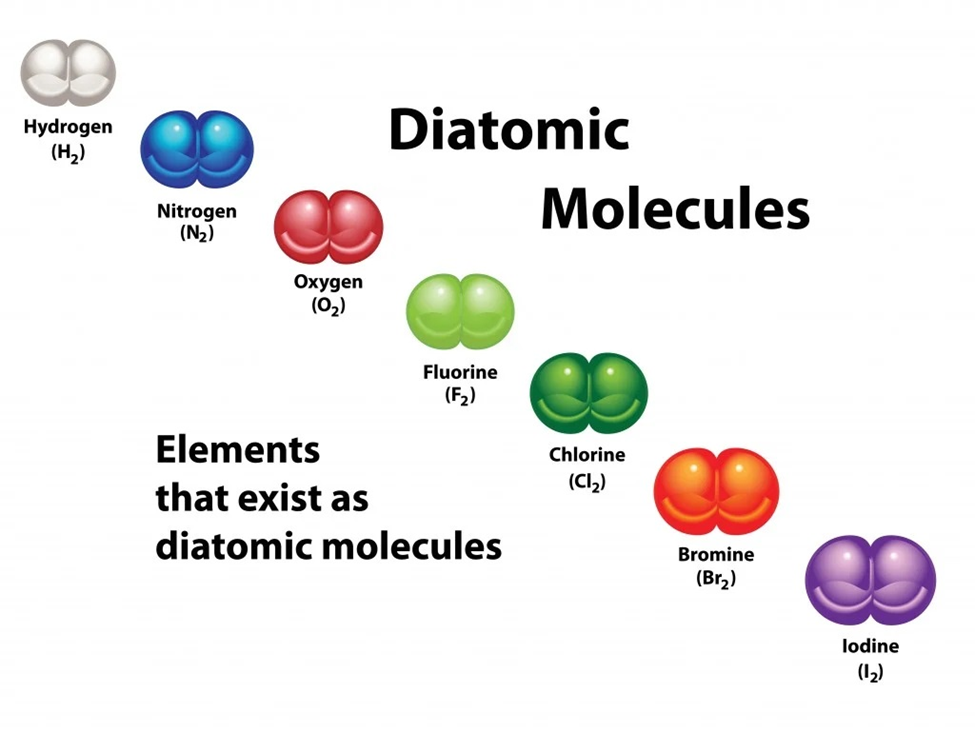
For example, a molecule of oxygen usually has two oxygen atoms. This is represented by the symbol O2. Hydrogen is another element which is usually found as a molecule. Hydrogen molecules are usually made of 2 hydrogen atoms. Molecules that are made up of two atoms of the same element are called diatomic molecules.
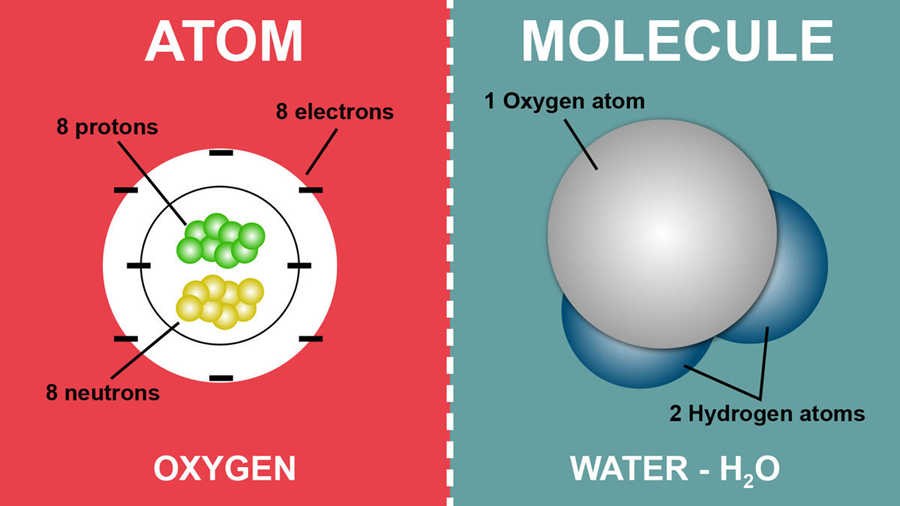
Molecules can also be made up of atoms from different elements. One common example of this kind of molecule is water. Water molecules are made of 2 hydrogen atoms, and 1 oxygen atom.
Molecules make it possible for there to be many different substances.
Remember, 99% of the crust of Earth is made up of 8 elements. How do you account for the huge variety of substances that exist? The elements join together in different combinations to form the substances,
The periodic table of the elements
Chemists have created a chart called the periodic table of the elements to help them organize and display the elements.
A scientist the 1800s named Dmitri Mendeleev came up with a way to organize elements based on their properties. He organized the elements in order of increasing mass. Then, he made a major discovery. He noticed that properties of the elements repeated themselves in cycles! In fact, the word “periodic” means “occurring in cycles.” So, he placed elements with similar properties in columns. The result was the periodic table of elements.
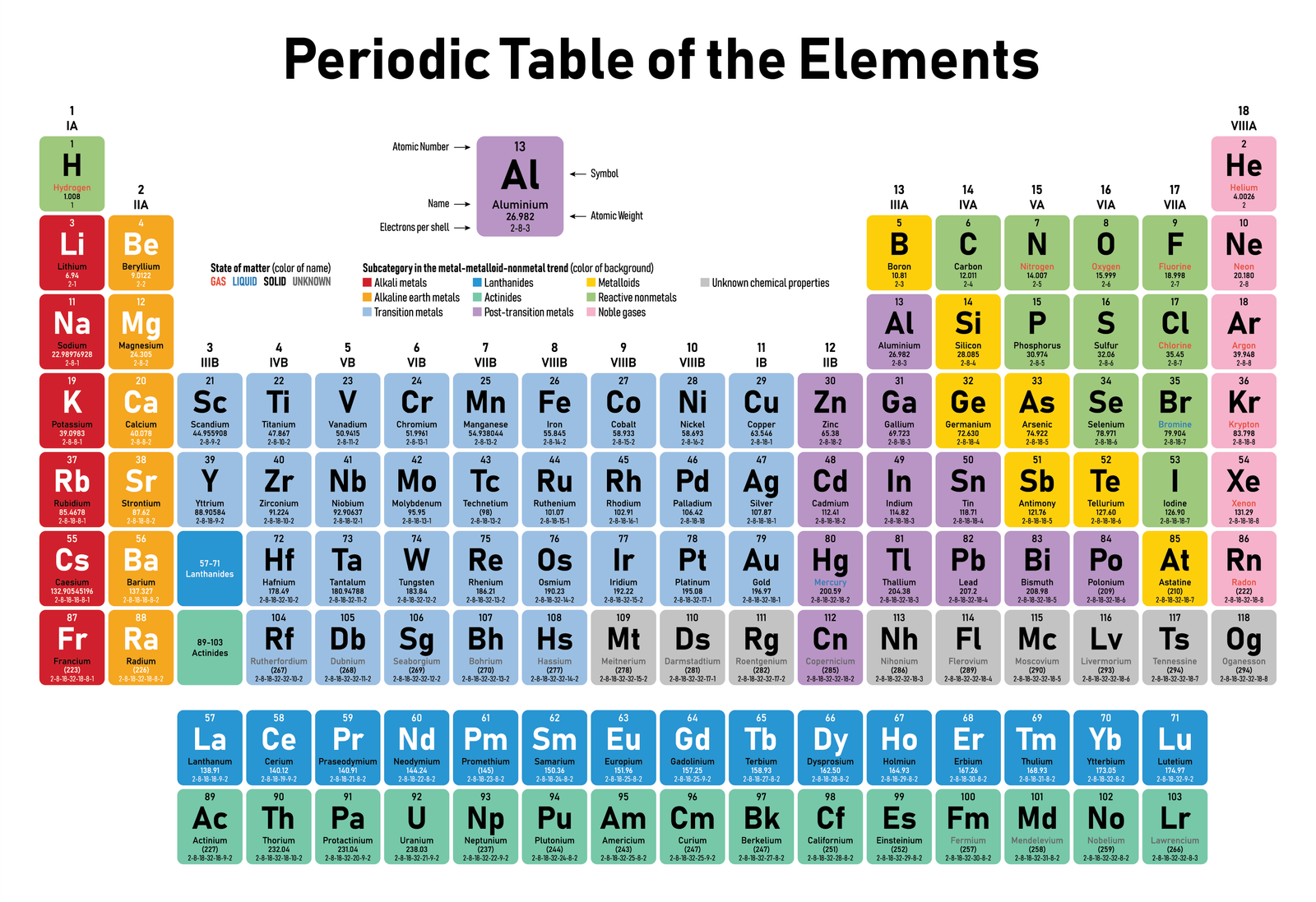
Every box in the periodic table represents a different element. Each one includes the element’s name, symbol, and atomic number.
The elements are organized on the periodic table by their properties. There are rows and columns that represent relationships between the elements. The rows in the table are called periods. The elements in a row have the same number of energy levels. The columns are called groups. The elements in each group have similar properties related to their structure. They also tend to form similar bonds.
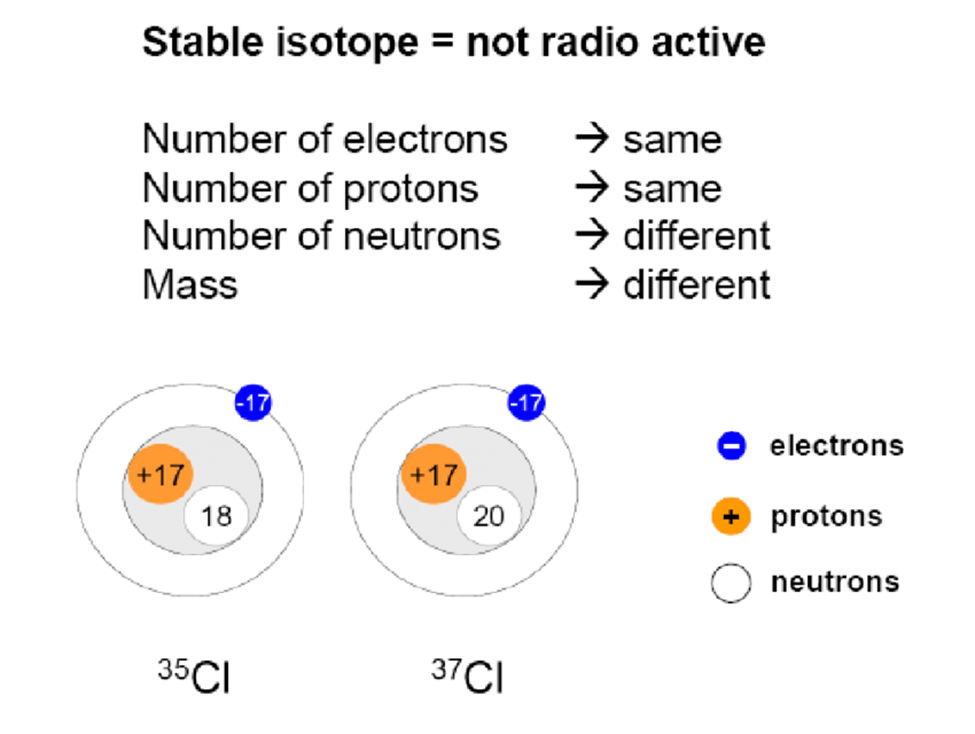
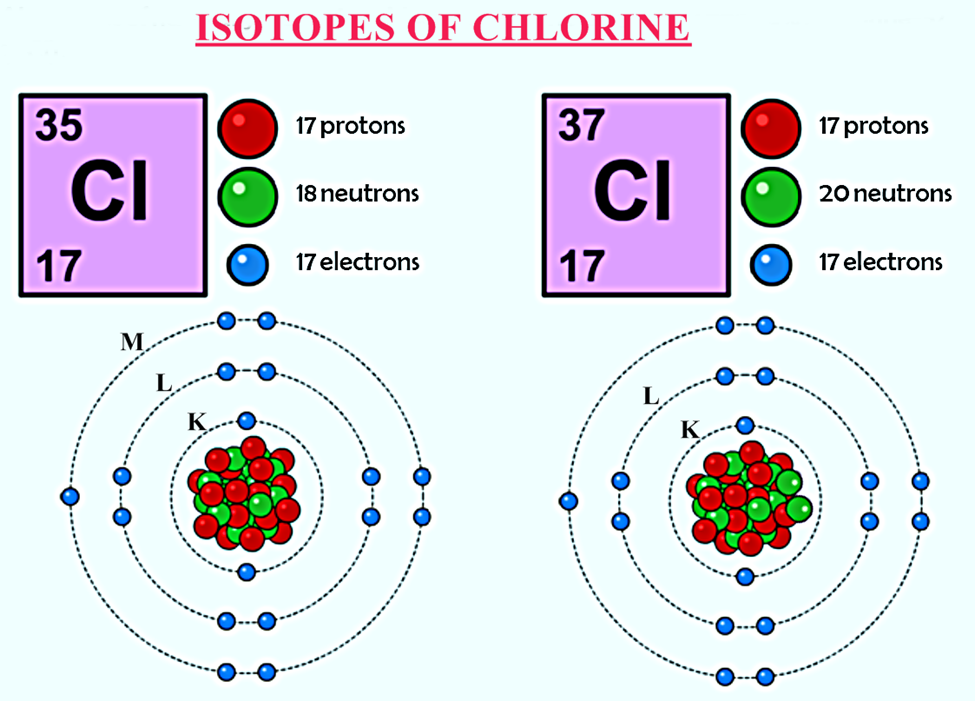
Look up the element chlorine on the periodic table found on the inside back cover of your book. Cl is the symbol for chlorine, as shown in Figure 13, but what are the two numbers? The top number is the element’s atomic number. It tells you the number of protons in the nucleus of each atom of that element. Every atom of chlorine, for example, has 17 protons in its nucleus.
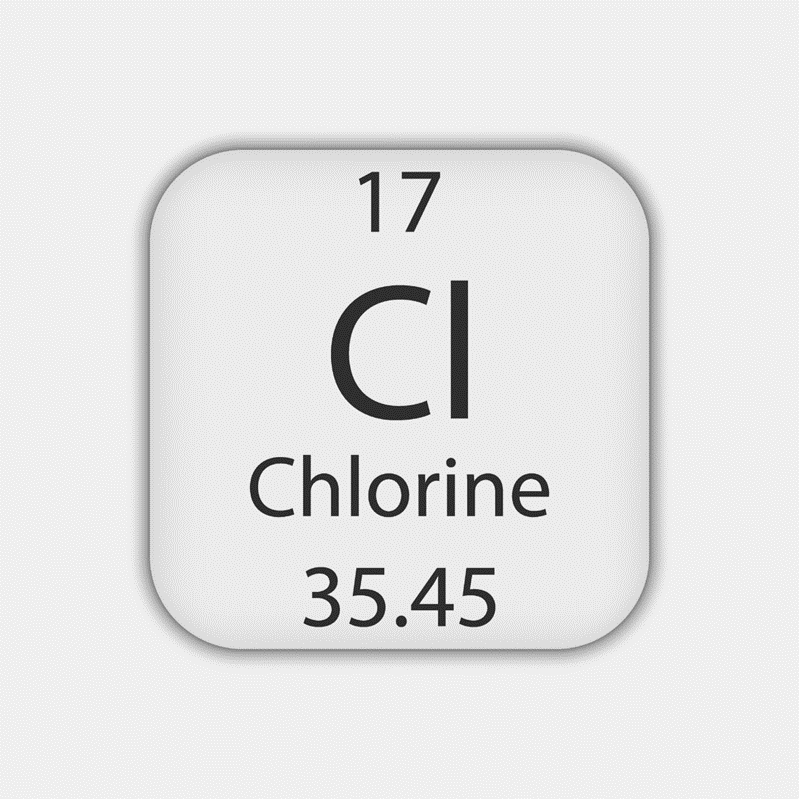
Although the number of protons changes from element to element, every atom of the same element has the same number of protons. However, the number of neutrons can vary even for one element.
For example, some chlorine atoms have 18 neutrons in their nucleus while others have 20. These two types of chlorine atoms are chlorine-35 and chlorine-37. They are called isotopes, which are atoms of the same element that have different numbers of neutrons.